Understanding Trade Winds: Formation, Effects, and Navigation
The Charles W. Morgan, the sole survivor of an American whaling fleet that once comprised over 2,700 vessels, exemplifies the historical significance of oceanic navigation. Ships like the Morgan frequently utilized routes dictated by the predictable movement of trade winds to traverse the vast oceans. These winds, recognized globally by mariners, along with their associated ocean currents, were instrumental in guiding early sailing vessels from European and African shores to the Americas. Conversely, they also facilitated the journeys of ships from the Americas towards Asia. Even in contemporary times, commercial vessels leverage these prevailing winds, often referred to as 'the trades,' and the currents they generate to expedite their oceanic voyages.
Key takeaways about trade winds: They are prevailing winds that blow from east to west, crucial for historical navigation and global weather patterns. Their formation is tied to the Coriolis Effect and pressure systems near the equator, creating distinct atmospheric circulation cells like the Hadley cell.
The Formation of Trade Winds
The genesis of these commerce-conducive winds is rooted in atmospheric dynamics. Between approximately 30 degrees north and 30 degrees south of the equator lies a region that experiences a unique atmospheric phenomenon. Here, the Earth's rotation imparts a slant to the air, directing it towards the equator. In the Northern Hemisphere, this movement is southwesterly, while in the Southern Hemisphere, it is northwesterly. This deflection is known as the Coriolis Effect.
When the Coriolis Effect combines with areas of high atmospheric pressure, it establishes the prevailing winds—the trade winds. These winds consistently move from east to west across a 60-degree belt on both sides of the equator. Understanding the trade winds meaning is fundamental to grasping global atmospheric circulation.
Equatorial Calm and the Doldrums
As the trade winds converge towards the equator, approximately five degrees north and south, a peculiar atmospheric condition arises. Both air and ocean currents significantly diminish, resulting in a band of hot, dry air. This 10-degree belt encircling Earth's midsection is commonly recognized as the doldrums, or more formally, the Inter-Tropical Convergence Zone (ITCZ).
Within the doldrums, intense solar heat warms and moistens the incoming trade winds. This warming causes the air to rise dramatically into the atmosphere, akin to the buoyancy of a hot air balloon. As this air ascends, it cools, leading to the formation of persistent bands of showers and storms that characterize tropical regions and rainforests. This process is integral to understanding the trade winds map and its implications for weather systems.
The Hadley Cell and Atmospheric Circulation
The rising air masses in the tropics do not dissipate; instead, they migrate towards the poles. At higher latitudes, these air masses descend back towards Earth's surface, typically near the horse latitudes. This sinking air contributes to the calm conditions and reduced precipitation observed in these zones, thereby completing a cyclical convection circuit known as a Hadley cell. The Hadley cell is a major driver of atmospheric circulation, heavily influenced by the trade winds.
Horse Latitudes and Wind Patterns
The horse latitudes, situated around 30 degrees north and south of the equator, are characterized by descending dry air from the upper atmosphere. This creates a zone of dry conditions and often, a noticeable lack of wind, which historically could stall voyages. This contrasts with the constant movement of the trade winds.
Between 30 and 60 degrees latitude north and south, a different set of prevailing winds takes hold: the westerlies. These winds blow from the northwest in the Northern Hemisphere and from the southwest in the Southern Hemisphere. The interplay between the trade winds and westerlies, along with polar easterlies, creates the complex global wind system.
Ocean Currents Driven by Trade Winds
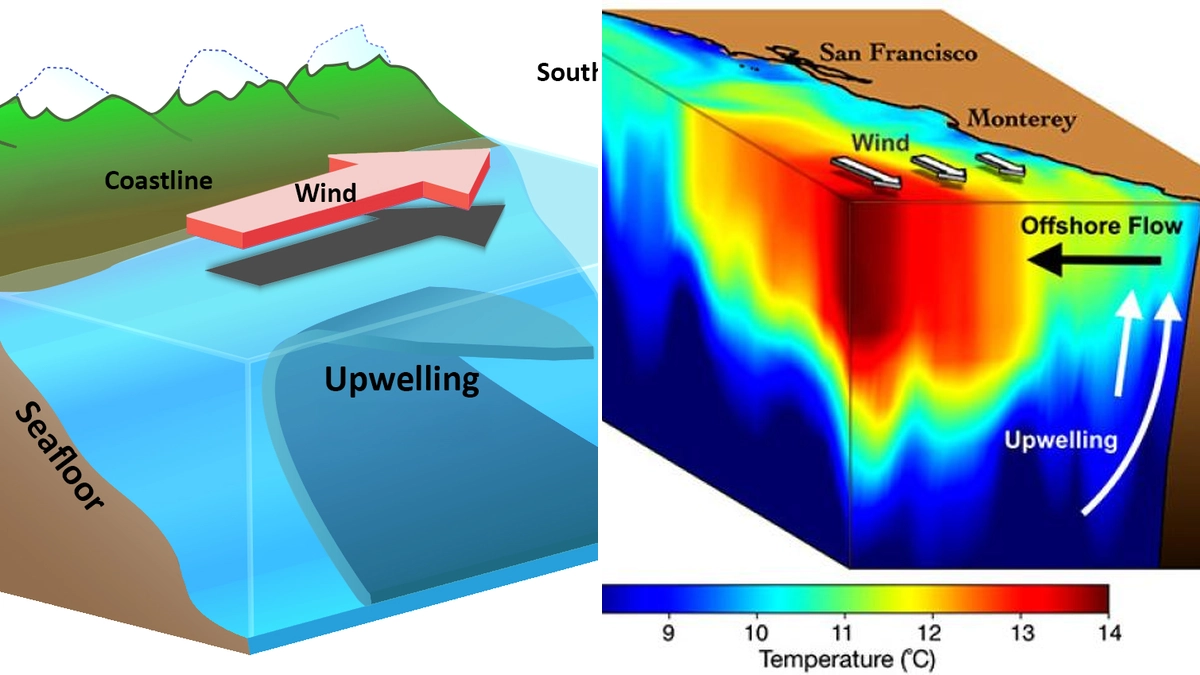
The influence of trade winds extends to oceanic circulation. The North Equatorial Current, for instance, flows from east to west, propelled by the northeast trade winds. This current forms a critical part of the larger North Pacific Gyre. Similarly, the South Equatorial Current mirrors this pattern, flowing east to west and driven by the southeast trade winds, contributing to the South Pacific Gyre.
An intriguing exception is the Equatorial Countercurrent, found roughly 5 degrees north and south of the equator. This fast-moving, unpredictable current flows from west to east, acting as a return path for water displaced westward by the trade winds. It is particularly pronounced during El Niño episodes, highlighting the dynamic relationship between winds and currents.
Navigational Significance of Trade Winds
Throughout history, knowledge of winds and currents has been paramount for successful voyages. Sailors relied on the predictable nature of the trade winds to chart courses across oceans, significantly reducing travel times. The ability to harness these winds allowed for efficient westward journeys from Europe and Africa to the Americas, and eastward journeys from the Americas to Asia.
Even today, the principles of using prevailing winds remain relevant in maritime transportation. The consistent easterly flow of the trade winds provides a reliable means of propulsion for sailing vessels and influences the routing of commercial ships.
Conclusion: The Enduring Influence of Trade Winds
The trade winds are more than just atmospheric movements; they are fundamental forces shaping our planet's climate, oceanography, and even human history through navigation. Their formation, driven by the Coriolis Effect and large-scale atmospheric circulation patterns like the Hadley cell, influences weather systems from tropical rainforests to temperate zones. The predictable flow of air and the resulting ocean currents have been vital for exploration and commerce for centuries.
By understanding the intricate relationship between the trade winds, the doldrums, the horse latitudes, and other prevailing winds like the westerlies, we gain a deeper appreciation for the complex dynamics of Earth's climate system. Continued study of these phenomena is crucial for accurate weather prediction, climate modeling, and sustainable maritime practices.

 21/07/2026