Understanding Tornadoes: Formation, Occurrence, and Safety
What is a Tornado?
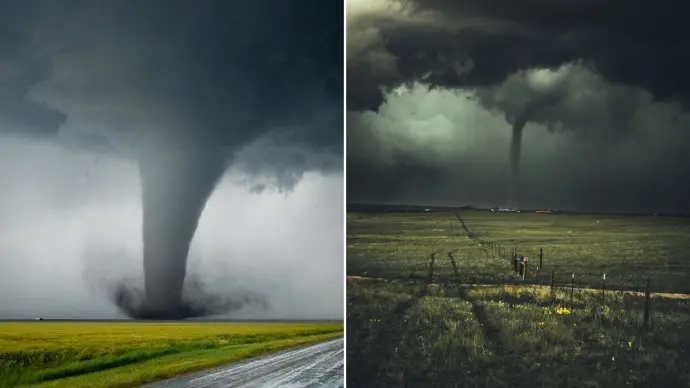
A tornado is defined as a narrow, violently rotating column of air that extends from a thunderstorm to the ground. Because wind itself is invisible, a tornado is typically made visible by the condensation funnel formed from water droplets, dust, and debris picked up from the surface. These atmospheric phenomena can be incredibly destructive, representing some of the most violent storms experienced on Earth.
How Tornadoes Form
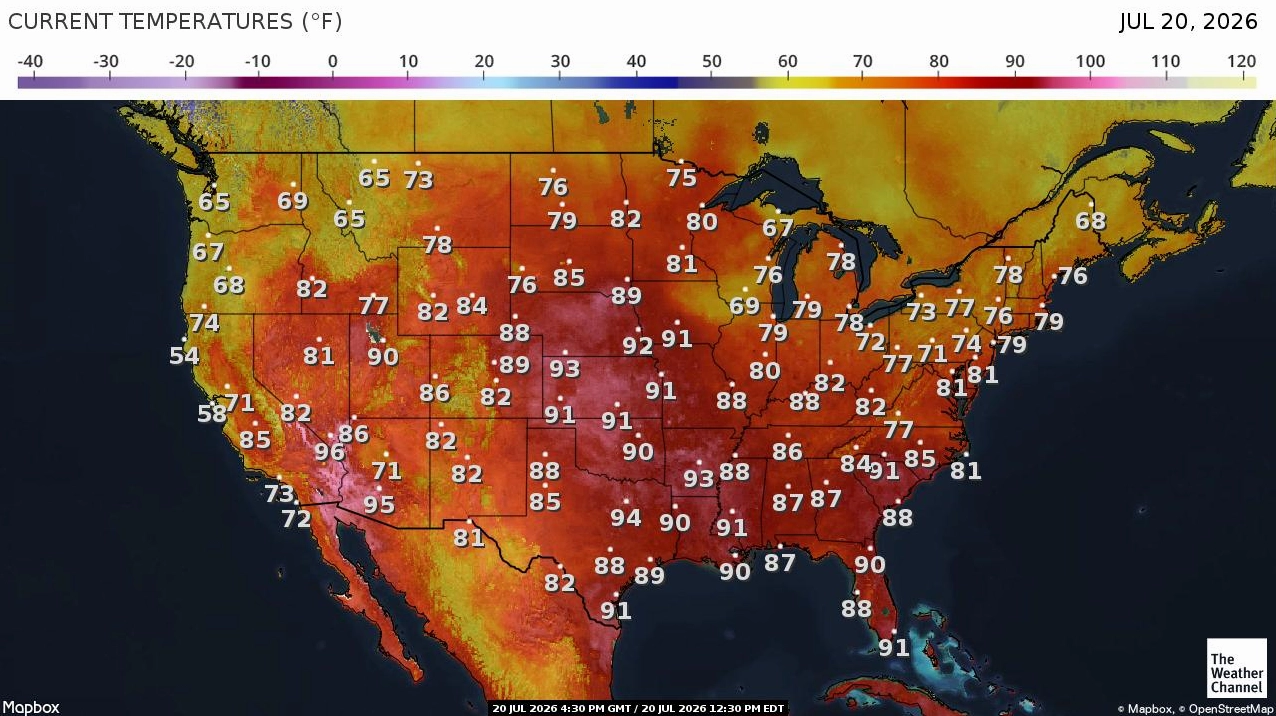
The formation of a tornado is a complex process that requires a specific set of atmospheric conditions within a thunderstorm. It begins when air rising within the storm, known as an updraft, starts to rotate. This rotation can be initiated by changes in wind speed and direction at different altitudes, a phenomenon called wind shear. As the rising air is influenced by these varying winds, it can begin to spin, creating a rotating column within the thunderstorm.
For a tornado to form, this rotation must extend to the ground. This typically occurs when air near the ground sinks and spreads out in gusts. These surface-level gusts, interacting with the rotating updraft, can cause the air near the ground to spin. This spinning motion then accelerates as it draws inward towards its axis of rotation, a principle known as conservation of angular momentum, similar to how a figure skater spins faster when they pull their arms in. When this rotating air column near the ground becomes sufficiently intense and is tilted vertically, a tornado can form. While many tornadoes form within supercell thunderstorms, which are particularly strong, not all supercells produce tornadoes, and sometimes tornadoes can form under different thunderstorm conditions.
Where and When Do Tornadoes Occur?
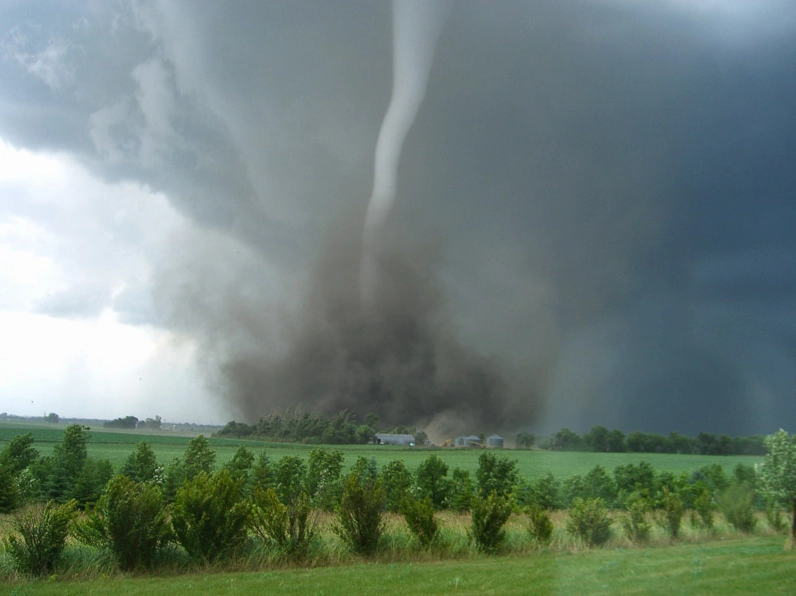
Tornadoes can occur in many regions around the world, including Australia, Europe, Africa, Asia, and South America. However, the United States experiences the highest concentration of tornadoes globally. The phenomenon known as "Tornado Alley" refers to a broad area in the central United States where tornadoes are particularly frequent. Maps of Tornado Alley can vary because tornado occurrence can be measured in different ways, considering all tornadoes, or focusing only on strong and violent ones.
It is important to note that the threat of tornadoes is not confined to this specific region. The U.S. tornado threat shifts seasonally: it is more prevalent in the Southeast during cooler months, moves towards the central and southern Plains in May and June, and affects the northern Plains and Midwest in early summer. Tornadoes have been reported in all fifty states, and violent tornadoes can and do occur outside of the traditional "Tornado Alley" boundaries.
The peak "tornado season" in the U.S. varies by region. For the southern Plains, it is typically from May to early June. Along the Gulf Coast, the season tends to be earlier in the spring. In the northern Plains and upper Midwest, tornado season usually occurs in June or July. However, tornadoes can and do happen at any time of year, and at any time of day or night, though they are most common between 4 p.m. and 9 p.m.
Tornado Watches vs. Tornado Warnings
Understanding the difference between a Tornado Watch and a Tornado Warning is critical for safety:
- Tornado Watch: Issued by NOAA Storm Prediction Center meteorologists when weather conditions are favorable for the development of tornadoes and severe weather. A watch covers a broad area, potentially multiple states, and serves as an alert to prepare for severe weather and stay informed.
- Tornado Warning: Issued by local NOAA National Weather Service Forecast Offices when a tornado has been sighted by spotters or indicated by radar, posing an imminent threat to life and property. A warning signifies that immediate action is required to seek safe shelter. Warnings typically cover smaller, more specific areas, such as parts or all of counties in the storm's path.
Remember, staying informed and acting promptly when warnings are issued can save lives. While specific models like the tornado 800 or tornado 900 might be used in forecasting, the core advice remains consistent: take shelter.
Tornado Strength and Impact
Tornado strength is rated using the Enhanced Fujita (EF) Scale, which estimates wind intensity based on the damage caused. The EF Scale ranges from EF0 (weakest) to EF5 (strongest), with each category corresponding to specific types and degrees of destruction. Understanding the potential impact of different tornado strengths is vital for preparedness.
The occurrence of tornadoes can be visualized using a tornado chart, which helps in understanding historical data and patterns. While concepts like the tornado v3 standard or tornado v5 pioneer might refer to specific models or classifications, the fundamental understanding of tornado impact remains consistent. The potential for damage, from minor structural issues with weak tornadoes to complete devastation with strong ones, underscores the importance of preparedness measures. Whether it's a tornado puncher vehicle or simply advanced forecasting, preparedness is key.
Safety Measures During a Tornado
When a tornado warning is issued, it is imperative to act immediately. The safest place to be is in a basement or an interior room on the lowest floor of a sturdy building, away from windows. Mobile homes and vehicles are not safe during a tornado. If caught outdoors, find a ditch or other low-lying area and lie flat, covering your head with your arms. Staying informed through NOAA Weather Radio or reliable local news sources is crucial.
Understanding the different types of tornadoes and their formation, such as those related to a supercell tornado, helps in appreciating the forces at play. While specific models like tornado 900n might offer detailed insights, the general safety principles remain paramount. Preparedness, including having an emergency kit and a family communication plan, significantly enhances safety during severe weather events.
Conclusion
Tornadoes are powerful natural events that require respect and thorough preparation. From understanding the complex atmospheric conditions that lead to their formation to knowing the difference between a watch and a warning, preparedness is key. By staying informed, having a safety plan, and knowing where to seek shelter, individuals can significantly mitigate the risks associated with these destructive storms.
Comments (0)
No comments yet. Be the first to share your thoughts!
Leave a Reply
Your email address will not be published. Required fields are marked *