Understanding Waterspouts: Types, Formation, and Safety
Waterspouts, often described as tornadoes over water, represent a captivating yet potentially dangerous weather phenomenon. While visually similar to their land-based counterparts, understanding their distinct types and formation processes is crucial for safety and knowledge. This article delves into the nature of waterspouts, differentiating between fair weather and tornadic varieties, and provides essential guidance for encounters.
Key Waterspout Insights
- Waterspouts are rotating columns of air and water mist that occur over bodies of water.
- They are categorized into two main types: fair weather waterspouts and tornadic waterspouts.
- Fair weather waterspouts form in calm conditions and are generally less intense.
- Tornadic waterspouts are essentially tornadoes that form over or move onto water, posing significant danger.
- The safest way to avoid a waterspout is to move at a 90-degree angle to its apparent path.
What Exactly is a Waterspout?
A waterspout is essentially a whirling column of air that extends from the surface of a body of water upwards, creating a visible condensation funnel that reaches from the cloud base to the water surface. This phenomenon is characterized by a spray vortex at the water's surface, which is the visible evidence of the intense rotation. According to NOAA's National Weather Service, these powerful vortexes can pose a serious threat to mariners and coastal communities.
Distinguishing Between Waterspout Types
Waterspouts are broadly classified into two primary categories, each with distinct formation mechanisms and associated risks:
Fair Weather Waterspouts
These are the more common and generally less dangerous type of waterspout. Fair weather waterspouts typically form in conditions of fair, calm weather, often during the early to mid-morning hours or sometimes in the late afternoon. They usually develop along the dark, flat bases of developing cumulus clouds, and are not associated with severe thunderstorms. Unlike their tornadic counterparts, fair weather waterspouts develop from the water surface upward. By the time the funnel becomes visible, the waterspout is often near its maturity. Due to forming in light wind conditions, they usually move very little.
Tornadic Waterspouts
Tornadic waterspouts are far more dangerous as they are, in essence, tornadoes that form over water or move from land to water. They share all the characteristics of a land tornado and are directly associated with severe thunderstorms. These events are often accompanied by high winds, rough seas, large hail, and frequent, dangerous lightning. They develop downward from the base of a thunderstorm, making them more intense and unpredictable.
The Formation Process of Waterspouts
The formation of waterspouts differs significantly between the two types. Fair weather waterspouts begin their development on the water's surface, with the condensation funnel extending upward as the vortex intensifies. This upward development is a key characteristic that distinguishes them from tornadic waterspouts. In contrast, tornadic waterspouts form in the highly unstable environments of severe thunderstorms, descending from the cloud base. The presence of a pre-existing thunderstorm is a critical factor for tornadic waterspout development, whereas fair weather waterspouts can emerge under relatively benign atmospheric conditions.
The raw data highlights that waterspouts form similarly to tornadoes, but their occurrence is over water bodies such as the Great Lakes, the Gulf, and the Atlantic Ocean. While fair weather waterspouts are common in areas like South Florida's coastal waters from late spring to early fall, tornadic waterspouts can occur any time of year, associated with any line of thunderstorms.
Waterspout Safety: What You Need to Know
Encountering a waterspout, regardless of type, requires immediate and cautious action. The National Weather Service strongly advises mariners to listen for special marine warnings broadcast on NOAA Weather Radio. Observing the sky for specific cloud formations can also provide advance warning. During summer with light winds, look for developing cumulus clouds with dark, flat bases as potential indicators of fair weather waterspouts.
Crucially, the best way to avoid a waterspout is to move at a 90-degree angle to its apparent movement. Never approach a waterspout to investigate, as even fair weather waterspouts can cause significant damage and injuries if they make landfall. If a waterspout does move onshore, the National Weather Service will issue a tornado warning. Typically, fair weather waterspouts dissipate rapidly upon landfall and rarely penetrate far inland. However, their intensity can be deceptive, and they should always be treated with extreme caution, just as you would a tornado.
Never attempt to navigate through a waterspout. While generally weaker than tornadoes, they can still inflict considerable damage to boats and pose a severe risk to anyone on board. Understanding the dynamics of waterspouts, whether the common waterspout in ocean environments or the rare waterspout galveston, is paramount for maritime safety.
Distinguishing Features: Waterspout vs. Tornado
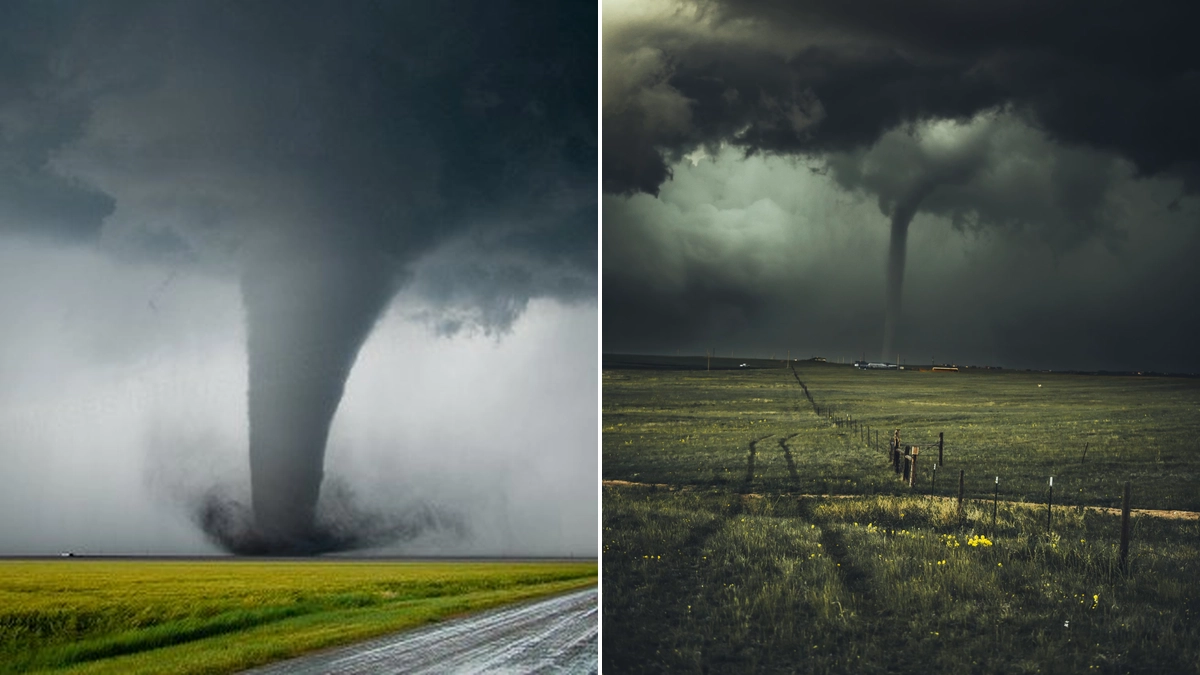
While closely related, waterspouts and tornadoes have key distinctions, primarily their location of formation and the weather systems they are associated with. Tornadic waterspouts are the direct water-based equivalent of land tornadoes, originating from severe thunderstorms. Fair weather waterspouts, on the other hand, are a distinct phenomenon that can form independently of thunderstorms, typically under fair weather conditions. This difference in genesis leads to variations in their intensity and predictability. The waterspout meaning is often tied to these differing types, with 'fair weather' implying less threat and 'tornadic' indicating a severe risk.
The visual appearance can be similar, but the underlying atmospheric dynamics differ. Recognizing these differences is vital for appropriate response. For instance, understanding waterspout seattle specific weather patterns can aid in localized preparedness.
Frequently Asked Questions About Waterspouts
Here are answers to common questions about these powerful water phenomena:
- What is the primary difference between a fair weather waterspout and a tornadic waterspout?
Fair weather waterspouts form in calm conditions and develop upwards from the water, while tornadic waterspouts are associated with severe thunderstorms and develop downwards from the cloud base, possessing tornado-like characteristics. - How quickly can a waterspout dissipate upon making landfall?
Fair weather waterspouts typically dissipate rapidly when they make landfall. - What is the recommended safety measure if a waterspout is sighted?
The safest action is to immediately move at a 90-degree angle to the waterspout's apparent motion. - Are all waterspouts dangerous?
While fair weather waterspouts are generally less dangerous, all waterspouts should be treated with caution as some can cause significant damage and injuries, especially if they move onshore.
Stay informed about weather advisories and always prioritize safety when on or near the water, especially during periods of potential storm activity.

 21/07/2026