Understanding Thunder and Lightning: A Comprehensive Guide
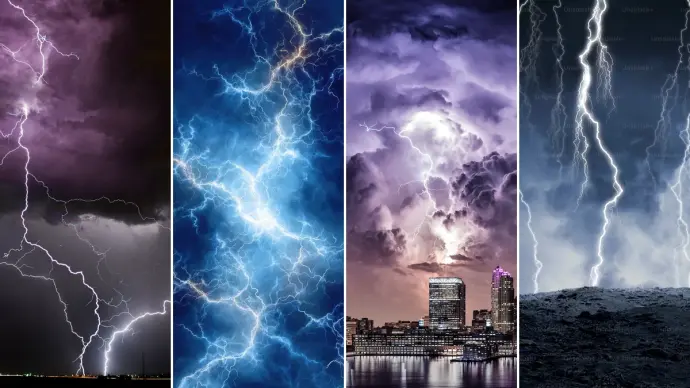
The Spectacle of Thunder and Lightning
Lightning is a powerful jolt of electricity that illuminates the night sky with plasma. It is the most striking feature of a thunderstorm, so much so that thunderstorms are named after it. The phenomenon of thunder is directly caused by lightning. Lightning is an electrical discharge that can superheat the surrounding air to temperatures as high as 30,000°C (54,000°F). This rapid heating causes an explosive expansion of air, generating a shock wave that transforms into the sound wave we perceive as thunder.
Key Takeaways: Thunder and Lightning
- Lightning is an electrical discharge that causes thunder.
- The rapid heating of air by lightning creates thunder.
- Charge separation within clouds leads to lightning formation.
- Light travels faster than sound, which is why we see lightning before hearing thunder.
Inside the Thunderstorm: Charge Separation
Within a thunderstorm, the turbulent air causes ice crystals high in the cloud to collide. These collisions knock electrons off some ice crystals and transfer them to others, creating a separation of electrical charges. The upper part of the cloud becomes positively charged with protons, while the base accumulates negative charges. This charge imbalance is crucial for lightning formation.
The Birth of a Lightning Bolt
The opposite charges attract: the negative charge at the cloud's base is drawn to the positive charge on the ground. When this negative charge becomes sufficiently strong, a flow of electrons, known as a stepped leader, moves towards the Earth. Simultaneously, positive charges surge upward from the ground, attracted to the stepped leader. When these leaders meet, a powerful electrical current, the return stroke, travels up into the cloud, which we see as a brilliant flash of lightning. This entire process, including the dramatic thunderbolt, is a result of these electrical forces.
Why We See Lightning Before Thunder
Thunder and lightning occur almost simultaneously, but the flash of lightning is perceived before the booming sound of thunder. This is due to the significant difference in the speed of light and sound. Light travels approximately 343 meters per second, while sound travels much slower. This fundamental difference in speed accounts for the time delay between seeing the lightning and hearing the thunder.
The Electrical Power of Lightning
Lightning's power stems from the immense accumulation of electrical charges within a storm cloud. When the potential difference between the cloud and the ground (or between different parts of the cloud) becomes great enough to overcome the insulating properties of the air, a discharge occurs. This discharge, whether a direct lightning bolt or a subtler electrical event, is what generates the intense light and heat associated with a thunderstorm.
Engaging with Thunderstorm Information
Understanding atmospheric phenomena like thunderstorms is crucial for safety and scientific knowledge. Resources such as those related to Wireless Emergency Alerts and StormReady programs are vital for public awareness and preparedness. For those interested in the specific dynamics of basketball teams like the Oklahoma City Thunder, information about draft nights and player acquisitions offers a different perspective on the word 'thunder' in a modern context.
The Science Behind the Sound
The explosive expansion of air heated by lightning is the direct cause of thunder. This rapid expansion creates a powerful sound wave. The intensity and duration of the thunder depend on the nature of the lightning discharge. A close lightning strike might produce a sharp crack, while a more distant one can result in a prolonged rumble as the sound waves reflect off various surfaces.
Thunderbolt 4: A Technological Analogy
While 'thunderbolt' in meteorology refers to lightning, the term has also been adopted in technology, most notably with Thunderbolt 4. This high-speed interface shares the name due to its rapid data transfer capabilities, drawing an analogy to the swift and powerful nature of lightning. Though unrelated to atmospheric phenomena, it highlights how the concept of rapid energy discharge influences our language.
Conclusion: Appreciating Nature's Power
Thunder and lightning are awe-inspiring displays of nature's power, driven by fundamental principles of electricity and atmospheric physics. From the charge separation within clouds to the explosive expansion of air creating thunder, each element plays a vital role in the dramatic spectacle of a thunderstorm. Staying informed about weather phenomena and safety measures is essential when these powerful events occur.
Comments (0)
No comments yet. Be the first to share your thoughts!
Leave a Reply
Your email address will not be published. Required fields are marked *