Ball Lightning: Unraveling the Mystery of Electrical Orbs
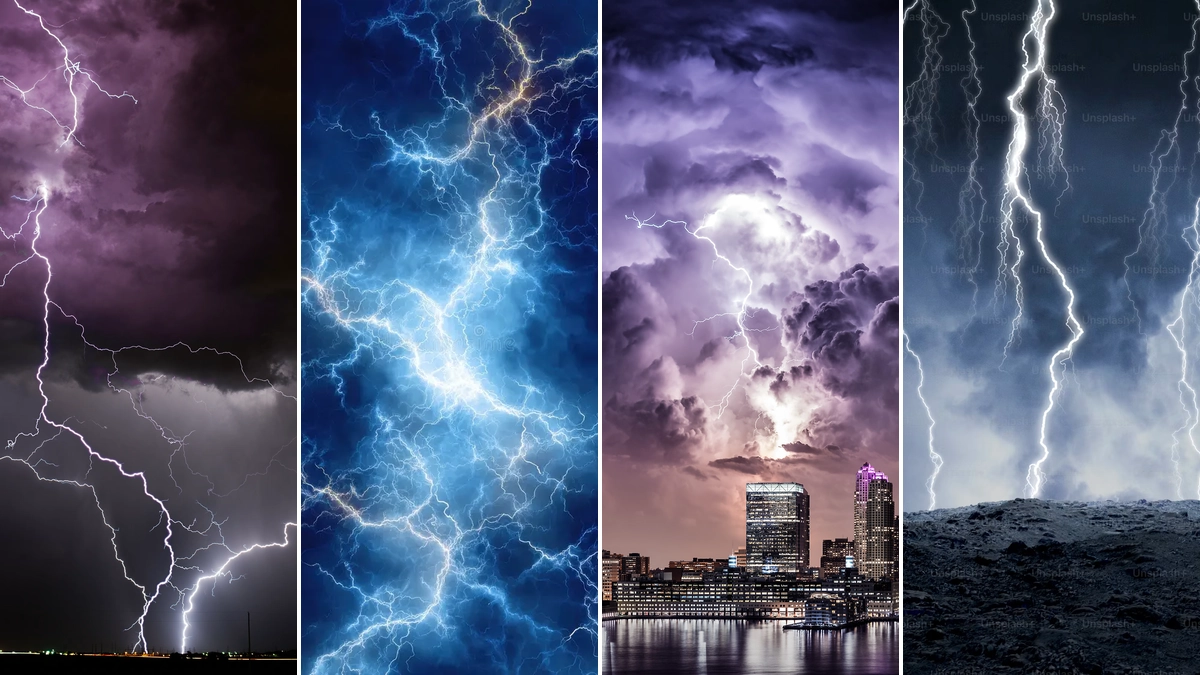
Instances of ball lightning—glowing, electric orbs in the sky—have captivated and mystified us for centuries. The bizarre phenomenon, also known as globe lightning, typically appears during thunderstorms as a floating sphere that can range in color from blue to orange to yellow, disappearing within a few seconds. It is sometimes accompanied by a hissing sound and an acrid odor. Lightning in general is an electrical discharge caused by positive and negative imbalances within clouds themselves, or between storm clouds and the ground. A lightning flash can heat the air around it to temperatures five times hotter than the sun’s surface. This heat causes surrounding air to rapidly expand and vibrate, which creates thunder.
Ball lightning is a rare, poorly understood atmospheric electrical phenomenon described as a luminous, spherical object. Its existence has been debated for centuries, with theories ranging from plasma phenomena to optical illusions.
Is Ball Lightning Real?
The question of whether ball lightning is real has long sparked debate among scientists and skeptics. While some argue it could be a misinterpretation of more common phenomena, many scientists believe it to be a genuine natural occurrence. One reason for skepticism is the lack of reliable, reproducible evidence, as ball lightning is incredibly rare and unpredictable, making it difficult to study in a controlled environment.
One of the first recorded sightings of ball lightning occurred in 1638, when a "great ball of fire" came through the window of an English church. That and other early accounts suggest that ball lightning can be deadly. At least one study has theorized that about half of all ball lightning sightings might be hallucinations caused by the magnetic fields during storms. That said, scientists seem to agree ball lightning is real, even if they don't yet fully understand what causes it.
Scientific Investigations and Theories
Researchers have been trying to understand the causes behind this captivating phenomenon. In 2012, researchers from Lanzhou, China's Northwest Normal University inadvertently recorded a ball lightning event while studying a thunderstorm. The ball appeared just after a lightning strike and traveled horizontally for about 10 meters. Spectrometers detected silicon, iron, and calcium in the ball, all of which were also present in the local soil. This observation supports a theory that ball lightning results from a ground strike creating a reaction between oxygen and vaporized elements from the soil. This ionized air, or plasma, is similar to the condition that enables St. Elmo's Fire, a stationary glow sometimes confused with ball lightning.
Another theory, published in 2012, suggests that the presence of glass might generate ball lightning. Atmospheric ions could accumulate on the surface of a window, producing enough of an electrical field on the other side to generate a discharge. Furthermore, a 2016 study proposed that microwave radiation produced when lightning strikes the ground could become encapsulated in a plasma bubble, resulting in ball lightning.
Ball Lightning and Other Phenomena
Ball lightning has also been associated with earthquakes. The rare flashes of light sometimes seen around seismic events can take many forms, including bluish flames appearing to come from the ground, quick flashes resembling regular lightning but originating from the ground, and the floating orbs known as ball lightning. A 2014 study of earthquake lights concluded that certain rocks tend to release electrical charges when a seismic wave hits, sparking colorful displays of light.
Scientists have also attempted to recreate ball lightning in laboratory settings. In 2006, researchers at Israel’s University of Tel Aviv created a laboratory version using a microwave beam. More recently, in 2018, quantum physicists demonstrated a synthetic, knotted magnetic field that mirrors and possibly helps explain ball lightning. Despite these investigations, the ball lightning phenomenon remains largely mysterious.
Witness Accounts and Modern Observations
Personal accounts, like that of Millie Drozda, a grandmother who witnessed ball lightning from her Chicago apartment decades ago, add a human element to the scientific discussion. She described a curious light floating through her room, illuminating and bouncing off surfaces, leaving her terrified. This anecdote highlights the startling and often frightening nature of these encounters.
Advancements in technology have provided more tangible clues. For instance, in 2014, Chinese scientists captured what they believe could be ball lightning on video during a thunderstorm. This rare ball lightning video provided valuable data for analysis. While skeptics might attribute such sightings to optical illusions or hallucinations, the increasing number of documented cases and scientific research lends credence to the reality of ball lightning.
Understanding the Nature of Ball Lightning
Ball lightning is typically described as a luminous, spherical object that varies in size, from a few centimeters to several meters in diameter. Witnesses often report these glowing orbs appearing during or after thunderstorms, sometimes floating through the air or moving unpredictably. Unlike ordinary lightning, which lasts for mere milliseconds, ball lightning can persist for several seconds, making it even more mysterious and intriguing.
The history of reported sightings is extensive, with one of the earliest accounts dating back to the 12th century. Despite hundreds of sightings since then, scientists have struggled to explain the exact nature of ball lightning, leading some to question its reality. The complexity of the ball lightning phenomenon means that much is still to be learned.
The Future of Ball Lightning Research
The Lanzhou researchers' findings, suggesting a link between ground strikes and soil elements, provide a concrete avenue for future study. Further research into plasma physics and electromagnetic interactions may unlock the secrets behind ball lightning. The possibility of ball lightning occurring in houses, though rare, adds another layer of inquiry for researchers and homeowners alike.
Ultimately, while the exact cause of ball lightning remains elusive, ongoing scientific investigation and the collection of more detailed observations, potentially including more ball lightning video evidence, are crucial steps toward demystifying this fascinating atmospheric spectacle.
 20/07/2026