Understanding Fog: Formation, Types, and Safety
Fog, a common yet often underestimated atmospheric phenomenon, plays a significant role in our daily lives, particularly concerning visibility and safety. Often described as a cloud that touches the ground, fog is essentially composed of tiny water droplets or ice crystals suspended in the air near the Earth's surface. Understanding how fog forms, the various types that exist, and how to navigate safely through it is crucial for everyone.
The Science of Fog Formation
Fog develops when the air cools to its dew point, causing water vapor to condense into visible water droplets. This cooling can occur through several mechanisms. One primary method is radiational cooling, where the ground loses heat to space, cooling the air layer directly above it. This process is most effective on clear, calm nights.
Another significant factor is advection, where warm, moist air moves over a cooler surface. The contact with the cooler surface causes the air to cool to its dew point, leading to condensation and fog formation. Evaporation also contributes; when water evaporates into the air, it increases the air's humidity. If this saturated air then cools, fog can form. This is often seen after rainfall or near bodies of water.
Key Fog Formation Factors:
- Cooling Air: Air temperature reaching the dew point.
- Moisture Content: Sufficient water vapor in the atmosphere.
- Condensation Nuclei: Tiny particles (like dust or salt) for water vapor to condense upon.
Types of Fog Explained
Meteorologists classify fog into several distinct types based on its formation process and location:
Radiation Fog
This type of fog forms during the night under clear skies with calm winds. The Earth's surface absorbs heat during the day and then radiates it into space after sunset. As the ground cools, it cools the air layer directly above it. If there is enough moisture in this layer, it will reach saturation, and radiation fog will form. It typically varies in depth from a few feet to about 1,000 feet and often remains stationary. Driving can become extremely hazardous due to near-zero visibility at times.
Valley Fog
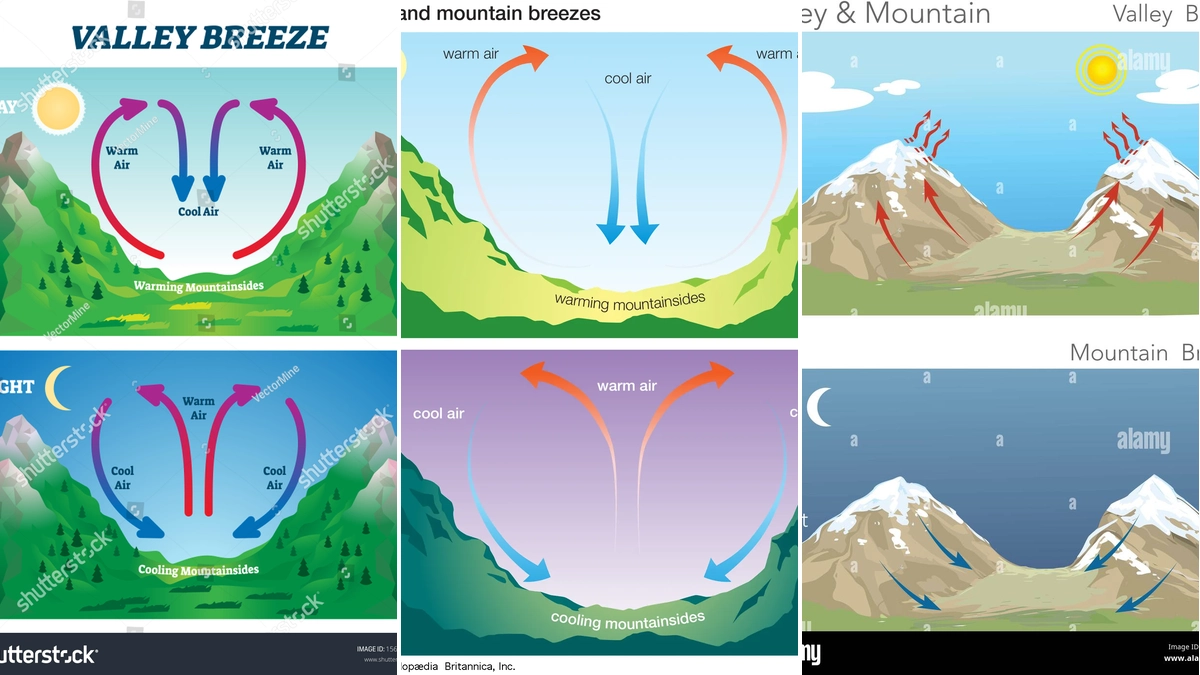
Valley fog is a specific type of radiation fog. It occurs when cooler, denser air settles into valleys after sunset. As air along ridgetops and upper mountain slopes cools, it drains downslope into the valley floor. Radiational cooling continues in the valley, leading to saturation and fog formation. Valley fog can be particularly dense and persistent.
Advection Fog
Advection fog forms when warm, moist air moves horizontally across a cooler surface, such as the ocean or a snow-covered landmass. The lower layer of the air is cooled by the surface below, leading to condensation. This type of fog is common along coastlines and can persist for long periods.
Upslope Fog
Upslope fog occurs when moist air is forced to rise up a sloping landmass, such as a mountainside. As the air rises, it expands and cools adiabatically (cooling due to expansion). If it cools to its dew point, condensation occurs, forming fog. This fog can often cover large areas and obscure higher elevations.
Steam Fog (Evaporation Fog)
Steam fog, also known as evaporation fog, forms when cool air moves over warmer water. The evaporation from the warm water saturates the cool air above it, leading to condensation. This type of fog appears as wisps or patches and is common over lakes, rivers, and even hot pavement after rain. A 'fog matcha latte' might evoke a similar visual texture, though created by different means.
Hail Fog
Hail fog is a less common phenomenon that can occur during severe thunderstorms. It is associated with the rapid evaporation of water from melting hailstones, which can create localized pockets of saturation and fog. This often occurs in the downdraft area of a thunderstorm.
Navigating Safely in Foggy Conditions
Fog significantly reduces visibility, making travel hazardous. Adhering to safety precautions is paramount:
- Reduce Speed: Drive at a speed that allows you to stop within the visible distance.
- Use Low Beams: High beams can reflect off fog droplets, worsening visibility. Use your low beam headlights.
- Increase Following Distance: Maintain a greater distance between your vehicle and the one in front.
- Be Prepared to Stop: Watch for pedestrians, cyclists, and disabled vehicles.
- Listen: Turn down your radio and listen for traffic you might not see.
- Avoid Distractions: Put away your phone and focus solely on driving. The experience can feel quite foggy if your attention is divided.
For maritime and aviation travel, fog presents similar challenges. Mariners must rely on radar and fog signals, while pilots may need to divert or delay flights. The presence of fog, even when not deeply obscuring, can create a sense of unease, making navigation difficult.
Conclusion: Respecting the Atmosphere's Veil
Fog is a captivating yet potentially dangerous meteorological event. From the gentle blanket of radiation fog in a quiet valley to the challenging conditions at sea, understanding its formation and respecting its impact on visibility is key. By staying informed about weather conditions and practicing safe habits, we can better navigate the atmospheric veil that fog creates. Whether it's a simple drive or a complex journey, awareness is your best defense against the hazards of a foggy environment.
 21/07/2026