Understanding Aurora Borealis: Forecasts, Visibility, and Impacts
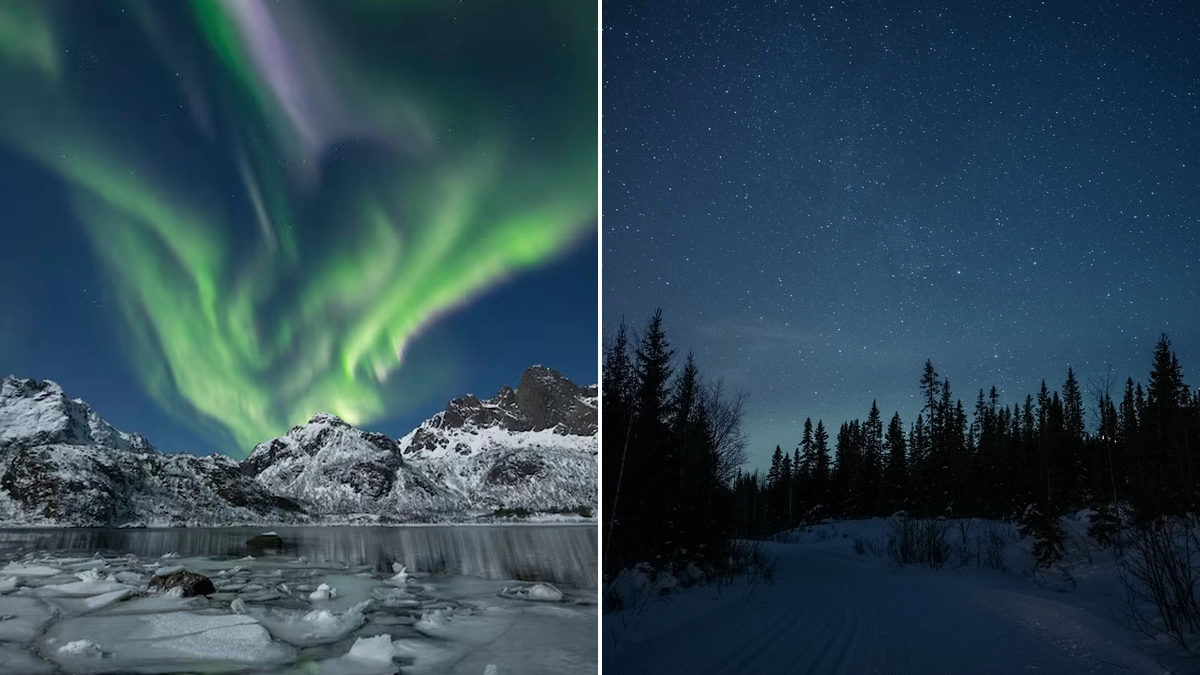
The ethereal dance of lights in the night sky, commonly known as the aurora borealis, captivates observers worldwide. This spectacular phenomenon, often called the Northern Lights, is a visual testament to the dynamic interaction between the sun and Earth's atmosphere. Understanding what is aurora borealis involves delving into solar activity, geomagnetic storms, and the unique conditions that allow these displays to occur.
Aurora Borealis: A Brief Overview
The aurora borealis is a natural light display in Earth's sky, predominantly seen in high-latitude regions. It is caused by disturbances in the magnetosphere caused by solar wind, which then produces charged particles that precipitate into the upper atmosphere.
The Science Behind the Northern Lights
Every eleven years, the sun enters a phase of maximum surface activity, known as the solar maximum. During this period, the sun generates an increased number of sunspots and associated phenomena, leading to intense "space weather." Very large solar flares and coronal mass ejections are common, spewing clouds of energetic particles toward Earth. When this solar debris collides with our planet's upper atmosphere, geomagnetic storms are triggered. These storms can pose hazards like disrupting electronic communications and power transmission, but they also create the conditions necessary for the aurora borealis to appear.
Predicting Aurora Borealis: The OVATION Model
Predicting the aurora borealis involves complex modeling and constant monitoring of solar activity. The OVATION model, developed at Johns Hopkins University, is a key tool used for forecasting the intensity and location of aurora displays. This empirical model uses geomagnetic activity data, specifically the Kp index, to predict where the aurora will be visible. For tonight's and tomorrow night's aurora prediction, the SWPC 3-Day Geomagnetic Forecast drives the OVATION model, focusing on the period between 6 PM and 6 AM US Central Time. This allows for a dynamic aurora borealis forecast, updated continuously.
The output of the OVATION model is typically presented as a green oval centered on Earth's magnetic pole, indicating the expected aurora borealis location. When the forecast predicts more intense activity, these ovals turn red. It's important to note that while auroras originate from space weather events, their visibility depends on several terrestrial factors.
Factors Affecting Aurora Visibility
While the aurora borealis can be a stunning spectacle, its visibility is influenced by several factors. The aurora borealis location plays a crucial role; being too far south often means missing out on displays. Maryland, for instance, is generally too far south for frequent sightings, although occasional strong geomagnetic storms can make them visible. Even in prime viewing locations, light pollution from urban and suburban areas can obscure the delicate lights. Therefore, finding an area with an unobstructed view of the northern sky, far from city lights, is essential for the best viewing experience.
Ideal viewing spots include mountains, remote public parks, or open fields away from urban centers. The aurora does not need to be directly overhead; it can often be observed from up to 1000 km away when the display is particularly bright and conditions are favorable. Aurora can often be observed somewhere on Earth from just after sunset or just before sunrise; it is not visible during daylight hours.
Historical Sightings and Impacts
Notable aurora displays have been recorded throughout history. For instance, strong solar activity in 2001 and 2004 resulted in aurora displays visible in regions like Maryland. Residents described intense sea-green clouds near the horizon and vertical beams of green shading to pink. Such events serve as a reminder of the potent forces at play in our solar system and their potential impacts, from awe-inspiring light shows to disruptions in technology.
For those seeking to capture the beauty of the aurora, finding the right aurora borealis wallpaper can bring a piece of this celestial wonder to your digital space. Many websites offer predictions and photo galleries, allowing enthusiasts to stay informed about potential displays and relive past events.
Space Weather and Its Broader Implications
The study of space weather, including phenomena like the aurora borealis, extends beyond visual appreciation. It has significant implications for various technological systems. Impacts on space weather include potential disruptions to GPS systems, electric power transmission, and high-frequency radio communications. Understanding these effects is crucial for infrastructure planning and mitigation strategies.
The OVATION model, along with resources like the SWPC's Aurora Dashboard, provides valuable short-term forecasts and historical data. For those interested in the aurora borealis forecast for North America this weekend or any given night, these resources are indispensable. The continuous updates ensure that predictions are as accurate as possible, helping aurora watchers plan their viewing opportunities.
Conclusion: Chasing the Northern Lights
Experiencing the aurora borealis is a bucket-list item for many. While its appearance is tied to the unpredictable nature of solar activity, advancements in forecasting models like OVATION have significantly improved our ability to predict and witness these breathtaking displays. By understanding the science, checking the aurora borealis forecast, and choosing optimal viewing locations away from light pollution, you increase your chances of witnessing this natural marvel. Keep an eye on space weather reports, and perhaps you'll soon be treated to the unforgettable spectacle of the Northern Lights dancing across the night sky.

 20/07/2026