King Tides vs. Spring Tides: Understanding Exceptional High Tides
Understanding the intricate dance of celestial bodies and Earth's oceans is key to comprehending tidal phenomena. Among these, 'King Tides' and 'Spring Tides' stand out as exceptionally high tidal events. While often used interchangeably, these terms refer to specific alignments that cause tides to surge higher than average, offering a glimpse into future coastal challenges.
What Defines a King Tide?
The term 'King Tide' is a non-scientific descriptor used to denote exceptionally high tides. These events are scientifically recognized as Perigean Spring Tides. They occur when the gravitational forces of the Moon and Sun align in a specific way, leading to a more pronounced tidal bulge. This alignment, combined with the Moon being at its closest point to Earth in its orbit (perigee), results in the highest predicted tides of the year.
Understanding Spring Tides
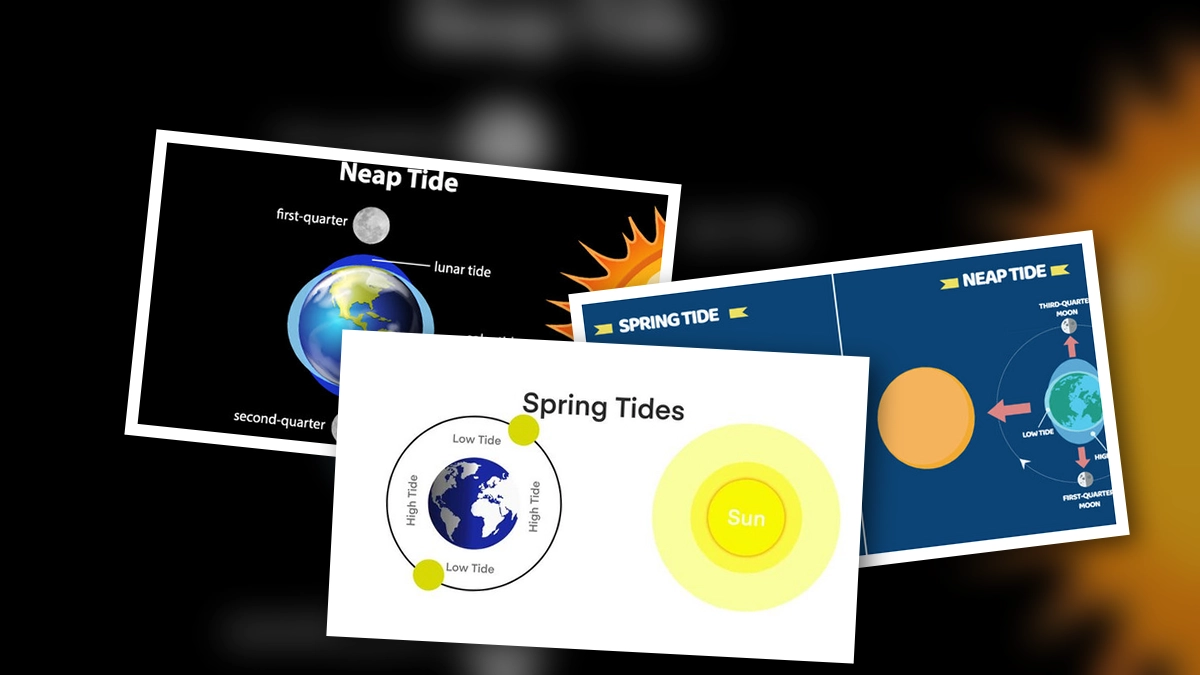
Spring tides are a regular occurrence, happening twice each lunar month during the new moon and full moon phases. During these times, the Sun, Moon, and Earth line up, and their combined gravitational pull creates a stronger tidal force. This causes the high tides to be higher than average and low tides to be lower than average. The name 'spring' does not refer to the season but rather to the tide 'springing' or jumping higher.
The 'Perigean' Factor: What Makes King Tides So Extreme?
The critical distinction that elevates a Spring Tide to a King Tide lies in the Moon's orbital path. The Moon's orbit around Earth is not a perfect circle but is elliptical. When the Moon is at its closest point to Earth, known as 'perigee,' its gravitational influence is magnified. A Perigean Spring Tide, or King Tide, occurs when a Spring Tide coincides with the Moon in its perigee. This synergistic effect amplifies the tidal forces, leading to tides that are several feet higher than normal.
The gravitational pull of both the Sun and Moon significantly influences tidal patterns. While the Moon's proximity makes its gravitational pull more dominant, the Sun's influence is also substantial. The interplay between these forces, especially during specific lunar phases and orbital positions, dictates the magnitude of the tides.
King Tides and the Reality of Sea Level Rise
Perigean Spring Tides, while natural and predictable, serve as a critical indicator of the escalating impacts of climate change and sea level rise. As global temperatures rise, glaciers and ice sheets melt, contributing to higher ocean levels worldwide. In coastal cities like Boston, where sea levels have already risen by about eight inches since 1950, these extreme high tides are becoming increasingly consequential.
These events provide a tangible preview of how future sea levels will affect daily life. What might have been minor nuisance flooding during past King Tides can now lead to significant inundation, affecting infrastructure, homes, and transportation systems even on calm, sunny days. This phenomenon, often termed 'sunny day flooding,' is expected to worsen as sea levels continue to climb.
Mitigation and Adaptation Strategies
Addressing the challenges posed by King Tides and rising sea levels requires a two-pronged approach: reducing greenhouse gas emissions to slow climate change and implementing adaptation strategies to manage inevitable changes.
On a global scale, reducing greenhouse gas emissions is paramount. This involves transitioning to sustainable energy sources, improving public transportation, and adopting more sustainable practices across industries and communities. Locally, adaptation is crucial. Organizations like the Stone Living Lab are researching and testing nature-based solutions to enhance the resilience of vulnerable coastal regions. These approaches aim to make coastal environments more adaptive to climate change while simultaneously improving natural and built surroundings.
Looking Ahead: Preparing for Higher Tides
The phenomenon of King Tides and Spring Tides offers invaluable insights into the future of our coastlines. By understanding the factors that cause these extreme events and their connection to sea level rise, communities can better prepare for and mitigate their impacts. Continued research, global cooperation on climate action, and local adaptation efforts are vital to safeguarding our coastal future.
 20/07/2026