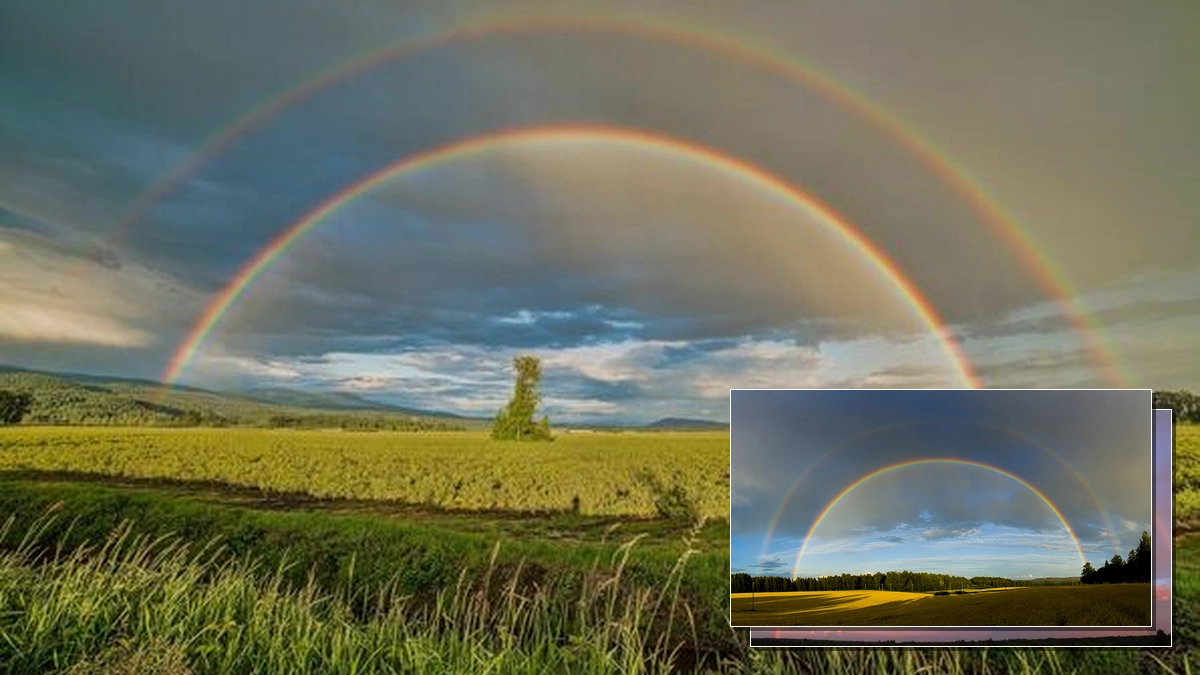
Understanding Atmospheric Refraction and Mirages
The concept of a mirage often sparks curiosity, blending the realms of optical phenomena with the practicalities of reliability and safety. While the term 'mirage' can evoke images of desert heat and optical illusions, its underlying scientific principles are rooted in atmospheric physics. Understanding these phenomena helps us appreciate the complex interactions of light with our environment.
The adventure of seeking efficiency, reliability, and safety in a versatile package is a journey. Exploring current offers on a family of vehicles is one way to embark on such a quest. However, to truly grasp the essence of a 'mirage' beyond its common association, we must delve into the science of atmospheric refraction.
The Science of Atmospheric Refraction
Atmospheric refraction is the bending of light as it passes through different layers of the Earth's atmosphere. This bending occurs because the Earth's atmosphere has varying densities and temperatures, which affect the refractive index of the air. The phenomenon is responsible for many visual effects, including the apparent position of celestial bodies and, of course, mirages.
The ability to focus images, whether with a lens or our own eyes, relies on the principle of refraction. Light bends when it moves from one medium to another with a different index of refraction. At the surface of a lens, which has a high refractive index (typically around n=1.5), this bending is significant. However, in the atmosphere, the index of refraction of air is much smaller (n=1.00029 at standard temperature and pressure compared to 1 for a vacuum). Despite this small value, the vast distances involved in observing atmospheric phenomena mean that even a slight bending of light can produce observable effects.
The index of refraction in the air is not constant; it varies with temperature and pressure. Light rays bend towards the slower medium at an interface. In air, this means light bends towards areas of greater pressure and lower temperature, as the speed of light decreases under these conditions. For light originating from outside Earth's atmosphere, such as sunlight or starlight, the primary influence on its speed is atmospheric pressure. Consequently, incoming light rays are bent downward towards the Earth.
Mirages Explained by Refraction
Mirages are perhaps the most well-known visual effect of atmospheric refraction. They predominantly occur in environments with significant temperature variations, such as hot deserts or over cold bodies of water. The bending of light rays is mainly influenced by temperature gradients near the Earth's surface, causing light to bend towards the cooler side of an interface.
Consider the common 'puddle mirage' seen on hot highways. The intense heat from the road surface causes the air directly above it to become significantly hotter and less dense than the air above. Light rays from the bright sky, when traveling downwards towards the hot surface, are refracted upwards, away from the hot road. When these refracted rays reach an observer's eye, they create an illusion of a reflective surface, like a puddle, on the ground. This phenomenon is a classic example of an inferior mirage, where the image appears below the actual object.
Similar effects occur in desert environments. Light rays from the sky or distant objects approaching a very hot surface are refracted upwards. If these rays are intercepted by an observer, the mirage appears below the object's actual position. This optical illusion can make it seem as though there is a body of water in the distance, or it can distort the appearance of vehicles, making them seem to float or be duplicated. Understanding these mirages is crucial for navigation and safety in such environments, and it's fascinating to consider how such phenomena might influence perceptions, much like a mirage prime build might be sought after in a virtual environment.
Types of Mirages
While the 'puddle mirage' is a common inferior mirage, other forms exist:
- Inferior Mirage: The image appears below the actual object. This is typically seen when light passes through a layer of hot air near a surface.
- Superior Mirage: The image appears above the actual object. This occurs when light passes through layers of cold air near a surface, often seen over cold water or ice. It can make distant objects appear elevated or even inverted.
- Fata Morgana: A complex and dramatic type of superior mirage that can distort objects into strange shapes, often appearing like castles or elaborate structures in the sky. This is a rare and captivating spectacle.
The concept of a mirage can also extend metaphorically. For instance, in gaming communities, a 'mirage map cs2' refers to a specific map layout, and strategies around it can be as elusive as a real-world mirage. Similarly, understanding 'mirage meaning' in different contexts reveals its multifaceted nature.
Other Atmospheric Refraction Effects
Mirages are not the only visible effects of atmospheric refraction. Other phenomena include:
- Looming: Objects appear larger or elevated due to light bending upwards.
- Apparent Flattening of the Sun: Near the horizon, the Sun appears flattened because refraction bends the lower part of the Sun's disk more than the upper part.
- Green Flash: A rare optical phenomenon seen shortly after sunset or before sunrise, where a green spot is visible above the Sun.
- Red Sunsets: Scattering of light causes sunsets to appear red, but refraction also plays a role in the Sun's apparent position.
- Twinkling of Stars: Atmospheric turbulence causes the light from stars to bend and refract rapidly, making them appear to twinkle.
Exploring these phenomena provides a deeper appreciation for the physics governing our visual world. Whether observing a distant mirage island or understanding the science behind a 'mirage hanoi' related optical event, the principles of refraction are at play.
Conclusion: The Bending of Light and Perception
Atmospheric refraction is a fundamental physical process that shapes our perception of the world around us. From the everyday bending of sunlight to the exotic spectacle of a mirage, these phenomena demonstrate the power of light interacting with varied atmospheric conditions. The study of these effects not only satisfies our scientific curiosity but also highlights the importance of understanding optical principles in various contexts, from natural observations to virtual environments like those featuring 'mirage smoke' tactics or 'mirage blade' effects.
 20/07/2026