Understanding Double Rainbows: The Science and Significance
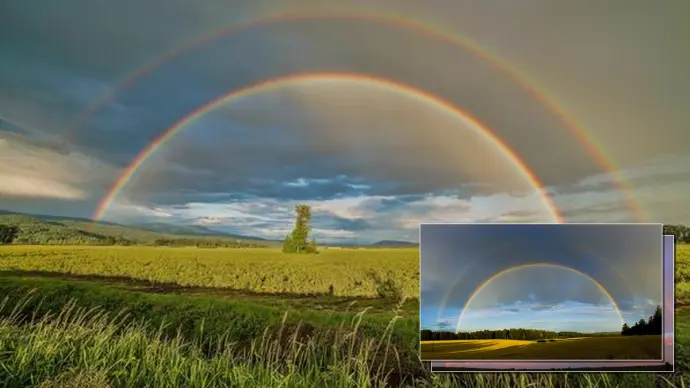
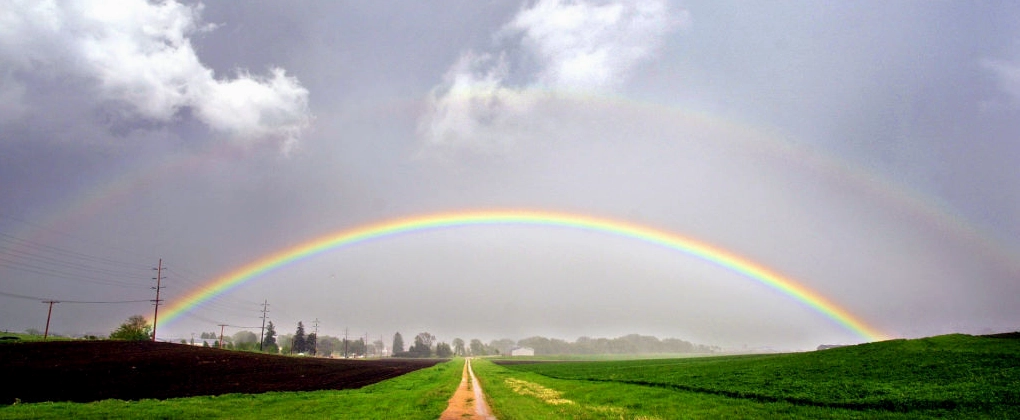
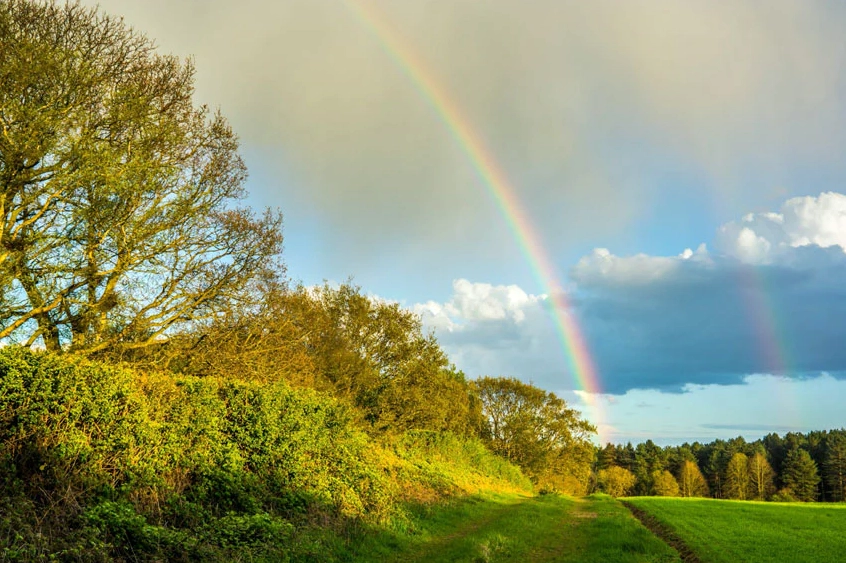
A rainbow, with just a hint of a double rainbow above it, arches across a Madison field after a storm moves away. The view is looking east toward Downtown from a hill near Mineral Point Road and Highway M. (Photo credit: State Journal archives) The classic rainbow is a single, bright, colored arc. Red is the outermost color of this arc, and violet is always the innermost color. On occasion, you may have seen two rainbows at once. The lower rainbow is the primary rainbow and the higher, fainter, colored arc is the secondary rainbow. The color sequence of the secondary rainbow is opposite to the primary; red is on the inside of the arc and violet on the outside.
When sunlight passes through a triangular glass prism, it separates into the colors of the rainbow. This separation happens because different colors bend, or refract, by different amounts. The shortest wavelengths, blue and violet, refract the most; red light refracts the least. This separation of colors is referred to as dispersion. Not only prisms but also water drops and ice crystals can cause dispersion.
To form a rainbow, you need large drops of water, the sun at your back, and the correct angle. Raindrops act as prisms, bending and reflecting the sunlight that falls on them, much like a crystal hung in a sunny window. As light enters water, its path changes. How much the direction changes is a function of the color of the light. You've likely noticed that a smooth water surface can act like a mirror and reflect light. If the light beam entering the raindrop reaches the back of the drop at a certain angle, it undergoes reflection and heads back toward the sun.
As the light exits the raindrop and re-enters the air, its path bends an amount that again depends on the color. This bending of light as it enters and leaves the drop disperses the sun's light into its spectrum of colors, forming the rainbow. Sometimes, the light reflects twice off the back of the raindrop, which leads to the secondary rainbow. This second reflection causes the order of the colors in the bow to reverse.
The Enduring Allure of Rainbows
Throughout history, mankind has interpreted the appearance of a rainbow in the sky as a good omen—a sign that storms have passed and better days are ahead. It has been seen as a bridge between the earthly realm and the heavens, or even a marker pointing to a hidden pot of gold. However you interpret the appearance of a rainbow, we now understand the scientific explanation behind why it occurs.
But if you are especially lucky, you may have witnessed a fully double rainbow, where two rainbows appear for the price of one! Let's delve into the science behind these incredible optical phenomena. The concept of the double rainbow often sparks curiosity, leading many to search for double rainbow meaning.
Understanding the Science Behind Any Rainbow
Before explaining the science of double rainbows, let's review the science behind a single rainbow. A single rainbow is an optical illusion created by the reflection, refraction, and dispersion of light through the prism of a water drop. When sunlight emerges through the clouds following a rainstorm, that light hits the water drops still floating or falling through the sky. Some sunlight is reflected immediately, but some enters the water drop and is refracted at the surface.
When this light hits the back of the raindrop, it bounces back and once again leaves the raindrop. Only now, the light has been separated into its individual color frequencies. The result is a rainbow of color exiting the raindrop. The colors of the rainbow are the same for everyone: red, orange, yellow, green, blue, indigo, and violet (ROYGBIV). In a single rainbow, red is the most prominent color and appears as the top band of color. This is due to the properties of light, including frequency and wavelength.
Last but not least, a rainbow does not have a physical presence; it is an optical illusion and its existence depends on the observer's position. So, while science, light, and color are endlessly fascinating, you'll never be able to follow a rainbow to its end to find a pot of gold! The idea of a pot of gold at the end of the rainbow is a popular motif, often referenced in the context of the double rainbow meme or the double rainbow song.
What Constitutes a Double Rainbow?
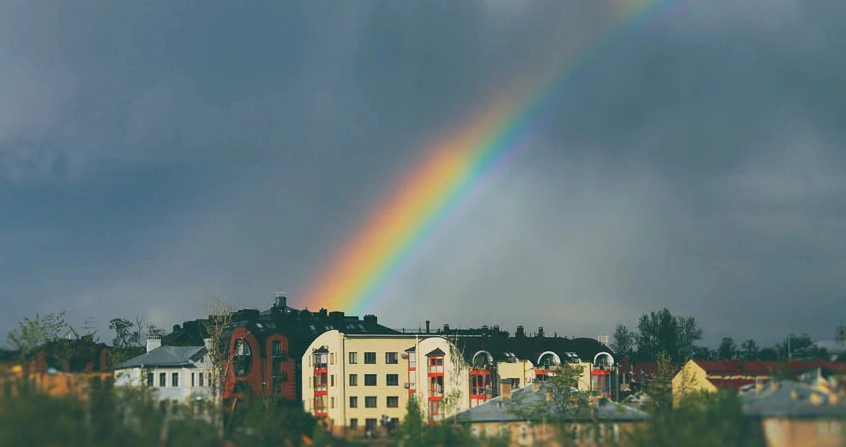
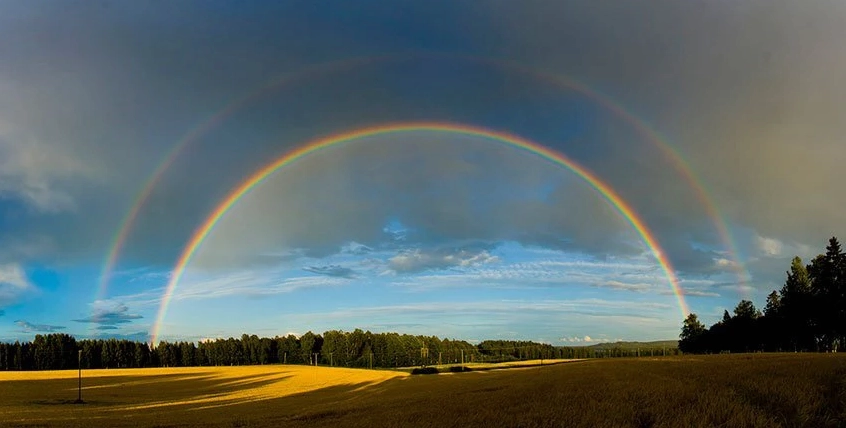
During a fully double rainbow, you will notice that one rainbow is noticeably brighter than the other. This brighter rainbow is called the primary rainbow. The primary rainbow, as described above, is the result of light reflecting off water drops once, then reflecting back out of the drop.
The second rainbow is called, you guessed it, the secondary rainbow. Secondary rainbows appear due to a phenomenon similar to the primary rainbow, with one significant difference: the light that enters the raindrop and refracts at the surface does not escape after hitting the back of the raindrop. Instead, that light is refracted a second time, creating the secondary rainbow. Many wonder about the double rainbow guy and his viral reaction to this stunning natural display.
Key Differences Between Primary and Secondary Rainbows
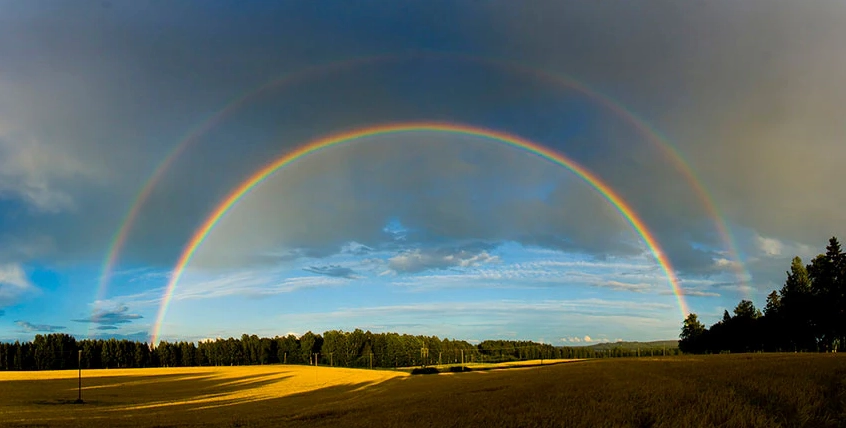
There are a few key differences between primary and secondary rainbows. First, the colors of the secondary rainbow are inverted from the primary rainbow. The colors of secondary rainbows are the opposite of primary rainbows, moving from violet, indigo, blue, green, yellow, orange, and red (VIBGYOR).
You will also notice that this rainbow is not as bright; secondary rainbows are always fainter and harder to see than primary rainbows. This is because the amount of light that is refracted a second time (rather than escaping the raindrop) is much less than the amount of light responsible for creating a primary rainbow. Finally, the shape and location of the secondary rainbow are slightly different, often appearing higher and broader than the primary bow.
The occurrence of a double rainbow, such as the famous double rainbow Perth sightings, is a captivating event for observers. It's a reminder of the intricate interplay between light and water.
The Spiritual and Symbolic Meanings of Double Rainbows
Beyond the scientific explanation, double rainbows hold a rich tapestry of symbolic meanings across cultures. Often seen as a sign of good luck and divine favor, they represent hope, transition, and the promise of better times. The appearance of two rainbows can amplify these meanings, suggesting a period of great change or spiritual awakening. It's a powerful symbol of duality and balance, bridging different realms of experience.
The double rainbow spiritual meaning is often associated with good fortune, new beginnings, and the fulfillment of dreams. Some believe it signifies a connection to the divine or a message from the universe. The vibrant colors, particularly when seen in a double formation, can evoke feelings of awe and wonder, reinforcing their positive connotations. The raw data mentions a double rainbow video that gained significant traction, highlighting the public's fascination.
Conclusion: The Enduring Wonder of Double Rainbows
The science behind double rainbows, involving the intricate dance of light, water, and reflection, is as fascinating as their symbolic interpretations. From the primary and secondary arcs with their distinct color orders to the cultural significance they hold, double rainbows continue to inspire awe and wonder. Whether viewed as a meteorological marvel or a spiritual sign, the double rainbow remains a potent symbol of hope and the breathtaking beauty of our natural world. Understanding the Science Of Double Rainbows enriches our appreciation for these fleeting, magical displays.
Next time you are fortunate enough to witness this spectacular phenomenon, take a moment to appreciate the physics and the potential symbolism. And remember, while you cannot follow a rainbow to find a pot of gold, the experience itself is a treasure.
Comments (2)
Sarah Chen
22:15:10 21-07-2026Mark Johnson
19:28:52 22-07-2026Leave a Reply
Your email address will not be published. Required fields are marked *