Understanding the Land Breeze Phenomenon
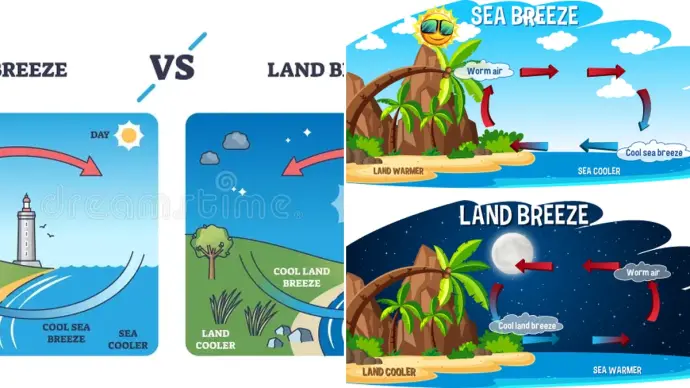
Key takeaway: A land breeze is a local wind that blows from the land towards the sea, typically occurring at night and in the early morning. It is caused by the differential cooling rates between land and water surfaces.
What is a Land Breeze?
A land breeze is a meteorological phenomenon characterized by a gentle wind flowing from the land towards a large body of water, such as an ocean or a large lake. This occurs primarily during the nighttime and into the early morning hours. It is the counterpart to the more commonly known sea breeze, which blows in the opposite direction during the day. Both phenomena are driven by differences in temperature and atmospheric pressure that arise between land and water surfaces due to their varying capacities to absorb and release heat.
The Science Behind Land Breeze Formation
The formation of a land breeze is rooted in the differential heating and cooling rates of land and water. During the day, land surfaces absorb solar radiation more quickly and heat up faster than water bodies. Conversely, at night, land surfaces cool down more rapidly than water. This difference in cooling rates creates temperature and pressure gradients that drive air movement.
Understanding the Pressure Dynamics
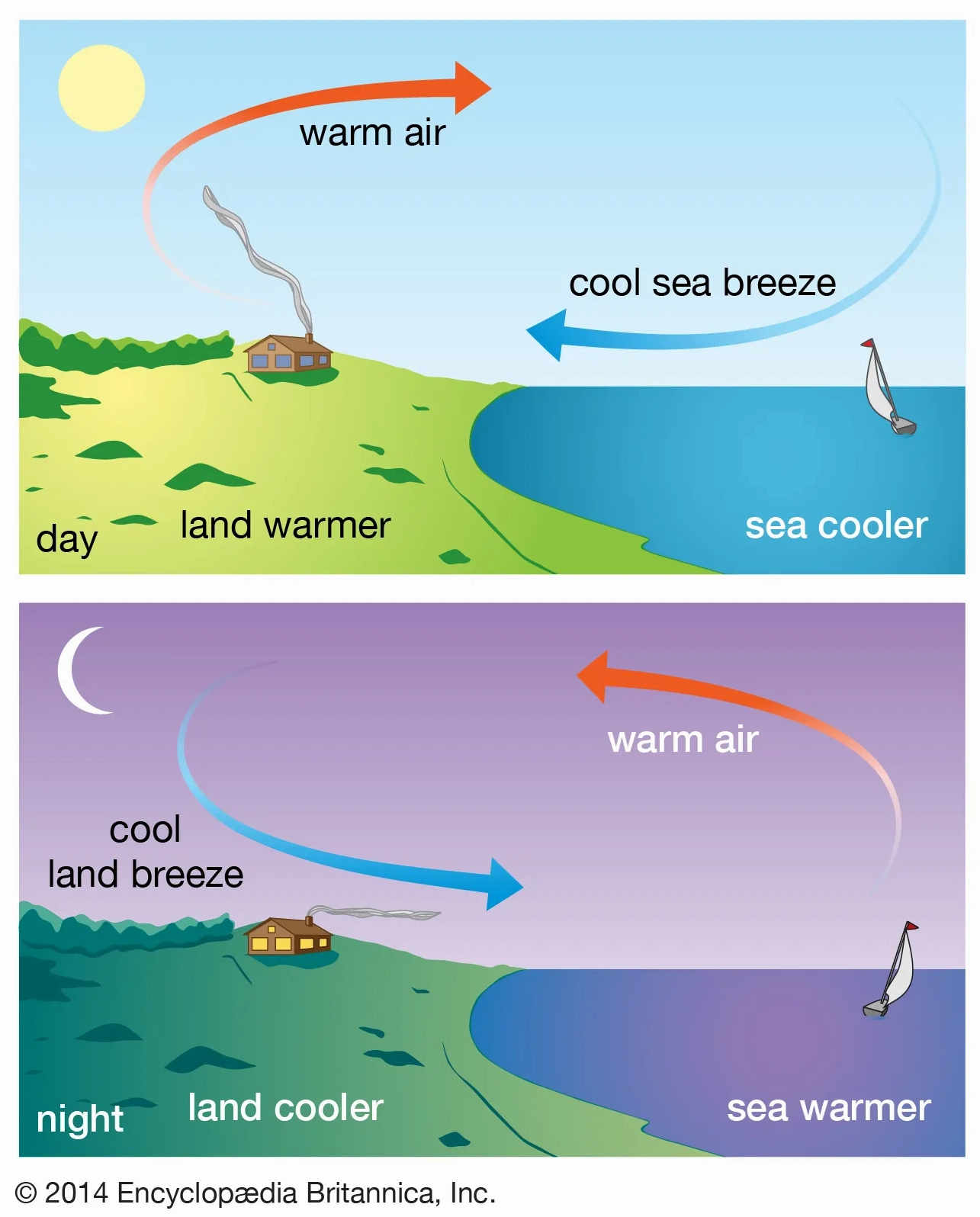
As the land cools down significantly after sunset, the air above it also cools and becomes denser. This cooler, denser air sinks, creating an area of relatively high atmospheric pressure over the land. Simultaneously, the adjacent water surface, having retained more heat, is now warmer than the land. The air above the water warms, becomes less dense, and rises, creating an area of lower atmospheric pressure over the water. The atmosphere naturally seeks to equalize these pressure differences.
Consequently, air flows from the region of high pressure (over the land) to the region of low pressure (over the water). This offshore flow of air is what we call a land breeze. This process explains the fundamental land breeze and sea breeze difference, highlighting how reversed temperature gradients lead to reversed wind directions.
Characteristics of a Land Breeze
Several characteristics distinguish land breezes from sea breezes:
- Timing: Land breezes typically occur from sunset through the night into the early morning hours, preceding the onset of the daytime sea breeze.
- Strength: They are generally weaker than sea breezes. This is partly because the nighttime cooling of the atmosphere over land is confined to a shallower layer compared to the daytime heating. Additionally, terrain, vegetation, and man-made structures can inhibit the flow of air from land to sea.
- Depth: The circulation of a land breeze is usually shallower than that of a sea breeze due to the more limited vertical extent of nighttime cooling.
- Cloud Formation: The convergence of the land breeze over the water can sometimes lead to the upward movement of air, fostering cloud development offshore during the night. These clouds may later dissipate with the arrival of the daytime sea breeze.
Land Breeze vs. Sea Breeze
The relationship between land breezes and sea breezes is that they are opposite phenomena driven by the same underlying principles. A land breeze and sea breeze diagram effectively illustrates this contrast. While a sea breeze blows onshore during the day as land heats up faster than water, a land breeze blows offshore at night as land cools down faster than water. The land breeze and sea breeze difference lies primarily in their timing and direction, dictated by the diurnal cycle of heating and cooling.
The land breeze blows during the night and early morning, whereas the sea breeze occurs during the day. Understanding the land breeze and sea breeze difference is crucial for activities along coastlines, influencing everything from sailing conditions to local weather patterns. A clear land breeze and sea breeze drawing can greatly aid in visualizing this concept.
Where Can Land Breezes Be Experienced?
Land breezes are not exclusive to ocean coastlines. They can also be observed along the shores of large lakes and other substantial inland bodies of water where significant temperature differences can develop between the land and water surfaces over relatively short distances.
Factors Influencing Land Breeze Intensity
The intensity of a land breeze can be influenced by several factors:
- Temperature Gradient: The greater the temperature difference between the land and the water, the stronger the land breeze will likely be. This gradient is often more pronounced during seasons like fall and winter when water temperatures remain relatively warm while nights become cool.
- Topography and Obstacles: Hills, trees, buildings, and other obstructions on the land can impede the flow of air towards the sea, weakening the land breeze.
- Geographical Location: Proximity to large bodies of water and local climatic conditions play a significant role.
Expert Insights and Practical Applications
For mariners, understanding the land breeze definition and its behavior is vital for safe navigation. While weaker than sea breezes, land breezes can still influence local conditions. They are particularly noticeable during cooler seasons when water temperatures are still elevated. The occurrence of a land breeze indicates a reversal of the daytime thermal circulation, showcasing the dynamic nature of coastal weather systems.
The land breeze diagram typically shows air flowing from higher pressure over the cooler land to lower pressure over the warmer water. This offshore movement can affect small boats near the coast during nighttime hours. It is a fundamental concept in marine weather forecasting.
Conclusion: The Nighttime Coastal Wind
The land breeze is a fascinating natural phenomenon that demonstrates the continuous interplay between land, water, and the atmosphere. By understanding the land breeze definition and its mechanics, we gain a deeper appreciation for the subtle yet significant forces shaping our coastal environments. While often overshadowed by its more robust daytime counterpart, the sea breeze, the land breeze plays a crucial role in the nightly weather patterns along our shores. Observing these winds offers a clear insight into the fundamental principles of thermodynamics and fluid dynamics in meteorology.
Seek further information on atmospheric phenomena and weather patterns to enhance your understanding.
Comments (0)
No comments yet. Be the first to share your thoughts!
Leave a Reply
Your email address will not be published. Required fields are marked *