Understanding Polar Easterlies: A Comprehensive Guide
Key Takeaways on Polar Easterlies
The polar easterlies are cold, dry prevailing winds originating from high-pressure polar regions and moving towards lower-pressure areas in the Westerlies at high latitudes. They are a crucial component of global atmospheric circulation, though often weaker and more irregular than other wind systems. Understanding their direction and behavior is key to comprehending broader climate patterns.
What Are Polar Easterlies?
The polar easterlies represent a fundamental aspect of Earth's atmospheric circulation. These winds are characterized by their dry and cold nature, originating from the high-pressure zones found at the planet's north and south poles. They flow outwards from these polar highs towards areas of lower pressure, specifically within the Westerlies located at high latitudes. This movement is a direct consequence of cold air subsiding at the poles, creating immense high-pressure systems that force air outwards towards the equator. A critical factor influencing their direction is the Coriolis effect, which, due to the Earth's rotation, deflects this outflow westward. Consequently, these prevailing winds primarily blow from east to west, hence the name 'easterlies'.
Unlike the more consistent westerlies found in the middle latitudes, the polar easterlies are often noted for their variable strength and irregularity. This variability can be influenced by numerous factors, including the dynamic interplay of pressure systems and seasonal shifts in atmospheric conditions.
The Science Behind Polar Easterlies: Driving Forces
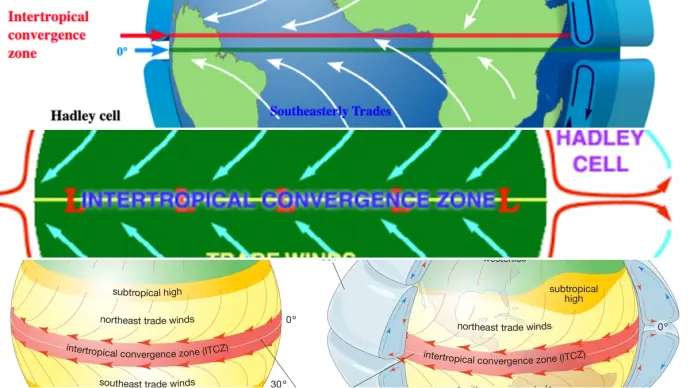
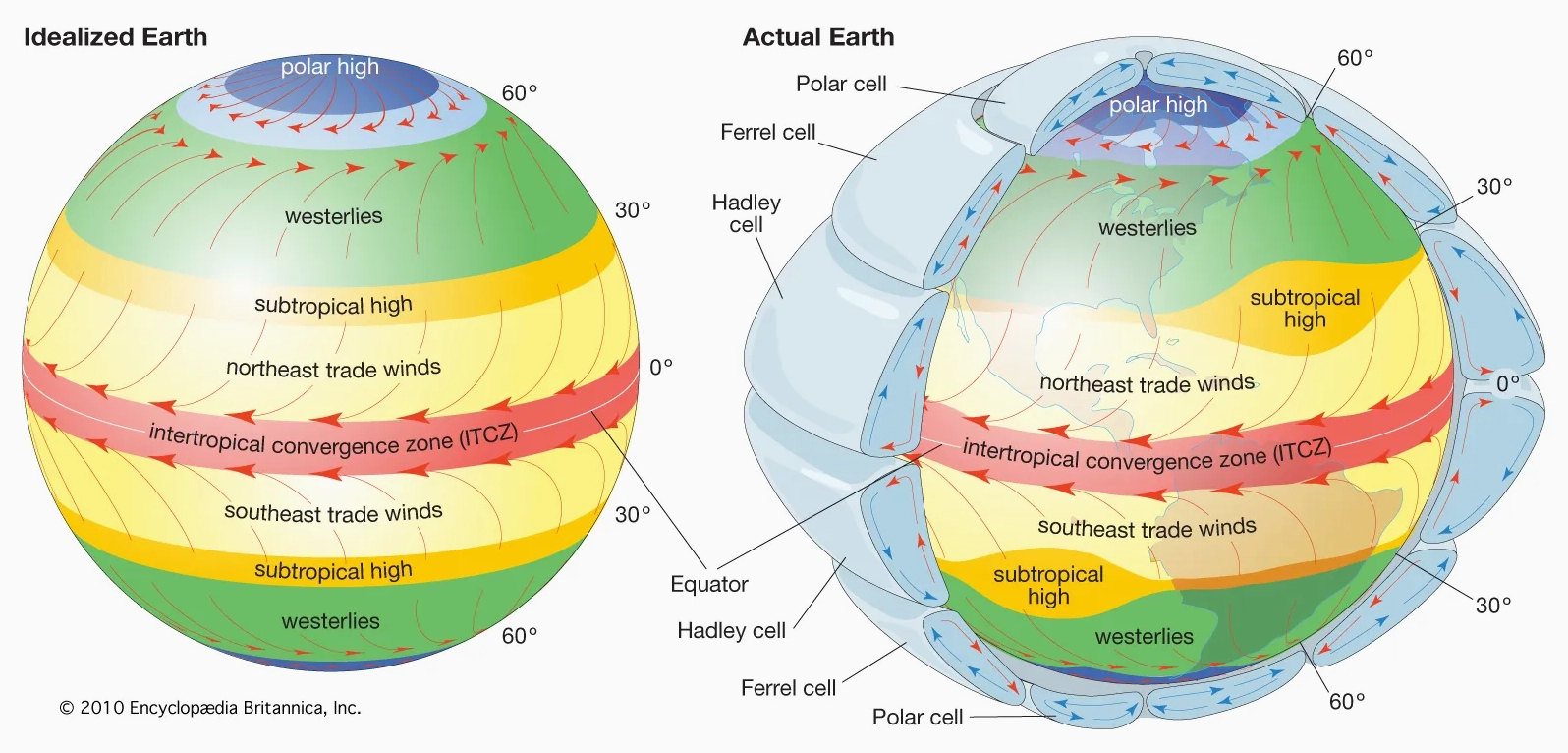
The formation and behavior of polar easterlies are deeply intertwined with the Earth's larger atmospheric circulation patterns. Global Atmospheric Circulation describes the continuous movement of air across the planet, serving as a vital mechanism for redistributing thermal energy and influencing storm systems. The fundamental drivers are temperature and pressure gradients, exacerbated by the Earth's rotation and tilt.
The Role of Pressure Gradients
At the poles, intense cold leads to the sinking of dense air, establishing zones of high atmospheric pressure, known as the polar highs. Conversely, areas closer to the equator experience warmer air, which rises and creates zones of low pressure. This stark contrast in pressure compels air to move from high-pressure regions to low-pressure regions, initiating the global wind patterns.
Coriolis Effect: Shaping the Wind's Path
The Earth's rotation introduces the Coriolis effect. As air attempts to flow directly from the poles towards the equator, the planet's spin deflects it. In the Northern Hemisphere, this deflection is to the right, and in the Southern Hemisphere, it is to the left. For the polar easterlies, this deflection causes the equatorward-moving air to be turned westward, resulting in the characteristic east-to-west flow.
Polar Cell Circulation
The polar easterlies are an integral part of the Polar cell, one of the three major atmospheric circulation cells in each hemisphere. In this cell, air rises at higher latitudes (around 60° N and S), travels poleward in the upper atmosphere, sinks at the poles to form the polar highs, and then flows outward towards the equator as the polar easterlies. This cell is the smallest and typically the weakest of the three main circulation cells (Hadley, Ferrel, and Polar cells).
Characteristics of Polar Easterlies
Several key characteristics define the polar easterlies:
- Direction: Primarily blow westward and equatorward.
- Location: Found poleward of approximately 60° North and 60° South latitude.
- Temperature: Consistently cold due to their origin in polar regions.
- Humidity: Generally dry as cold air holds less moisture.
- Strength: Often weaker and more irregular compared to winds in other latitude bands.
Variability in the Northern Hemisphere
In the Northern Hemisphere, the polar easterlies can exhibit significant variability. This is largely due to the complex mix of landmasses and oceans, which create more dynamic and often unpredictable pressure systems. During the summer months, the influence of these easterlies may diminish, giving way to different, more variable wind patterns as land and sea temperatures fluctuate.
Uniformity in the Southern Hemisphere
Conversely, the Southern Hemisphere's polar easterlies tend to be more uniform and consistent. This is attributed to the vast expanse of ocean surrounding the Antarctic landmass. The oceanic influence moderates temperature extremes and creates a more stable atmospheric environment, leading to less variability in these winds.
Polar Easterlies vs. Westerlies
A common point of comparison is between the polar easterlies and the Westerlies. The Westerlies are the dominant wind belts in the mid-latitudes (roughly 30° to 60° N and S), blowing predominantly from west to east. While both are part of the larger atmospheric circulation, they occupy different latitudinal zones and have distinct characteristics. The polar easterlies are confined to the highest latitudes, driven by polar high pressure, and blow eastward towards the equator. The Westerlies, driven by the Ferrel cell and the temperature contrast between the tropics and the poles, blow westward towards the poles in the upper atmosphere and eastward at the surface.
The interplay between these different wind systems significantly influences global weather patterns, including the movement of storms and the distribution of temperature and precipitation.
Factors Influencing Polar Easterlies
The strength and behavior of the polar easterlies are not static; they are influenced by a variety of dynamic factors:
- Pressure Systems: Fluctuations in the intensity and position of polar highs and subpolar lows directly impact the outflow of air.
- Seasonal Changes: Temperature differences between seasons alter the pressure gradients, affecting wind speed and direction.
- Jet Stream Variations: The position and strength of the jet stream, a high-altitude air current, can influence surface wind patterns, including the polar easterlies.
- Ocean Currents and Landmass Distribution: As noted, the geographical distribution of land and water plays a significant role, particularly in the Northern Hemisphere's variability.
Conclusion: The Enduring Influence of Polar Winds
The polar easterlies, though sometimes overlooked due to their often-weak and irregular nature, are indispensable to the Earth's climate system. They are a direct manifestation of the planet's thermal and rotational dynamics, shaping weather patterns at high latitudes and contributing to the global redistribution of heat. Their consistent westward direction, driven by the fundamental forces of atmospheric pressure and the Coriolis effect, underscores the intricate balance of our planet's climate. Continued study and monitoring of these winds provide crucial insights into broader climatic shifts and their potential impacts worldwide.
Comments (1)
Eleanor Vance
12:47:54 21-07-2026Leave a Reply
Your email address will not be published. Required fields are marked *