Mistral and Sirocco Winds Explained: Names, Locations, and Phenomena

The powerful forces of nature manifest in countless ways, and among the most captivating are the local winds that shape landscapes and influence climates. From the bustling coasts of the Mediterranean to the stark terrains of North Africa, specific wind patterns bear names rich with history and cultural significance. Among these, the Mistral and Sirocco stand out, often discussed together due to their regional proximity and the distinct atmospheric conditions they bring. Understanding these phenomena involves delving into their etymology, geographical origins, and the meteorological effects they produce.
Understanding the Mistral Wind
The Mistral is a fierce, cold, and dry northwesterly wind that predominantly affects the Rhône Valley in France and the northwestern Mediterranean. Its origins are deeply rooted in the geography of the region, often associated with the gap created by the Cévennes mountains and the Massif Central.
Etymology and Characteristics of the Mistral
The name 'Mistral' is believed to derive from the French word 'maistre,' meaning 'master,' signifying its powerful and commanding presence. This wind typically blows from the north or northwest, bringing clear skies and significantly lower temperatures, especially during the winter and spring months. Its arrival is often heralded by a sharp drop in temperature and an increase in wind speed, sometimes reaching gale force.
Geographical Impact of the Mistral
The Mistral's path funnels through the Rhône Valley, allowing it to reach the Mediterranean coast with considerable force. It is known for its drying effect, which, while beneficial for agriculture in clearing skies, can also lead to soil erosion and damage to crops if prolonged. Coastal regions, particularly in Provence, frequently experience its chilling effects.
Exploring the Sirocco Wind
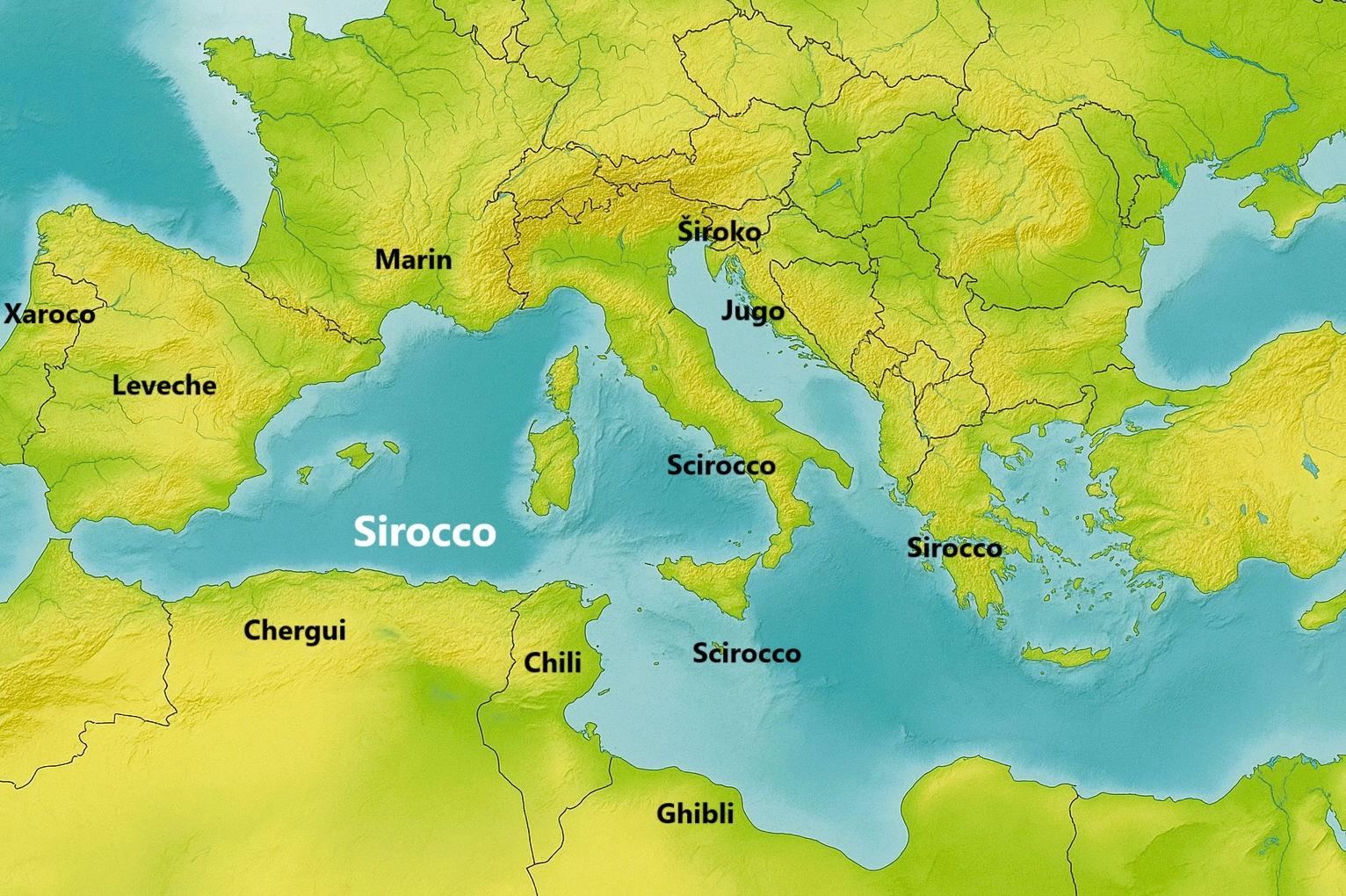
In contrast to the cold Mistral, the Sirocco is a hot, dry, and often dust-laden wind that blows from the south or southeast across the Mediterranean Sea. Its name originates from Arabic, reflecting its North African and Middle Eastern connections.
Etymology and Characteristics of the Sirocco
The term 'Sirocco' is thought to stem from the Arabic 'sharq,' meaning 'east.' This wind originates in the deserts of North Africa, picking up sand and dust as it travels northwards. Consequently, it often brings unseasonably warm temperatures, low humidity, and a distinctive reddish haze to regions it affects, including Southern Europe and the Middle East.
Regions Affected by the Sirocco
The Sirocco's influence is most pronounced in countries bordering the southern and southeastern Mediterranean, such as Italy, Malta, Greece, and Libya. Its warm, dry air can cause significant temperature increases and create uncomfortable, sometimes oppressive, conditions. The dust it carries can reduce visibility and affect air quality.
Comparative Analysis of Mistral and Sirocco
While both are significant regional winds, the Mistral and Sirocco represent opposing meteorological forces. Their seasonal occurrences and directional patterns create distinct climatic impacts.
| Wind Name | Origin Direction | Temperature Effect | Associated Phenomena |
|---|---|---|---|
| Mistral | North/Northwest | Cold, Dry | Clear skies, potential for frost, drying effect |
| Sirocco | South/Southeast | Hot, Dry | Dust storms, increased temperature, hazy skies |
The Mistral Sirocco 31 and Related Variants
The terms 'Mistral' and 'Sirocco' also extend beyond meteorological phenomena into other contexts, such as product names or specific identifiers. For instance, 'Mistral Sirocco 31' might refer to a specific model or version of a product, implying a connection to the characteristics of these winds, perhaps speed, power, or origin. Further exploration into variants like 'Mistral Sirocco MK2,' 'Mistral Sirocco Iron,' or 'Mistral Sirocco Iron Dingbat' would likely reveal their specific applications, possibly in technology, design, or manufacturing, where the naming convention evokes the inherent qualities associated with the winds.
Reviewing the Impact of Mistral Sirocco Winds
A 'Mistral Sirocco 31 review' would likely analyze the performance or features of a product named after these winds, comparing its effectiveness against established benchmarks. The term 'Mistral Sirocco winds' itself, when used in a broader context, can encompass discussions about regional weather patterns influenced by these powerful air currents, their historical impact, and their ongoing effects on local climates and human activities.
Broader Meteorological Context: Winds of the World
The Mistral and Sirocco are part of a larger global tapestry of local winds, each with unique characteristics and origins. Understanding these specific winds provides a window into broader meteorological principles and the fascinating ways our planet's atmosphere interacts with its diverse geography.
Other Notable Local Winds
Beyond the Mistral and Sirocco, numerous other local winds shape weather patterns worldwide. These include:
- Berg: A warm, dry wind on the southwestern coasts of South Africa and Namibia.
- Bora: A cold wind blowing on the north Adriatic coast and north Italian plains.
- Chinook: A warm, dry west wind occurring on the eastern side of the Rocky Mountains.
- Etesian: Winds blowing in the eastern Mediterranean during summer, typically from the northeast.
- Foehn: A warm, dry wind that occurs to the leeward of a mountain range, a phenomenon that gives rise to other winds.
- Haboob: A duststorm occurring in Sudan.
- Harmattan: A dry wind blowing from the northeast/easterly direction over West Africa.
- Khamsin: A duststorm in Egypt and the Red Sea, typically occurring over fifty days.
- Levant: A general term for easterly winds in the Mediterranean.
- Leveche: A warm, dry southerly wind in southeastern Spain, similar to the Sirocco.
Conclusion: The Enduring Influence of Winds
The study of winds like the Mistral and Sirocco offers a compelling glimpse into the dynamic relationship between geography and climate. Their distinct characteristics, from the chilling blast of the Mistral to the arid warmth of the Sirocco, underscore the localized power of atmospheric phenomena. Whether influencing regional weather patterns, agricultural practices, or even inspiring product naming conventions, these winds are integral components of our planet's complex environmental systems. Continuing to explore and understand these natural forces allows for better prediction and adaptation to the meteorological challenges they present.
Comments (0)
No comments yet. Be the first to share your thoughts!
Leave a Reply
Your email address will not be published. Required fields are marked *